Tag: sock knitting tutorial

  • Simple DK sock knitting pattern. DK Boot socks.

    Simple DK sock knitting pattern. DK Boot socks.

    This is a free sock knitting pattern for a pair of DK socks.

    Knit these really simple cuff-down bed socks with DK yarn and your chosen method of knitting in the round.

    In this pattern, I’ve used circular knitting needles to create a magic loop, but you could also try knitting with DPNs and two pairs of circular needles.

    What’s more, this DK sock knitting pattern includes a square heel (also referred to as the Dutch heel) and it is an efficient, short row heel that doesn’t involve any picking up of stitches.

    Find the handy tutorial below if you’d like to see how the short row heel is made.

    If you’d prefer this pattern without ads you can find the basic DK sock knitting pattern PDF on Ravelry or Ko-Fi.

    In this sock knitting pattern, we’ll cover:

    • Casting on in the round.
    • Knitting in the round.
    • Shaping a square heel.
    • Turning a sock heel.
    • Decreasing stitches and toe shaping.
    • Grafting stitches to form a seamless toe.

    Here’s what you’ll need to knit these simple DK boot socks:

    • 100g (150g, 200g) of DK yarn such as Stylecraft Batik [80% acrylic, 20% wool, 130m per 50g]. I used Indigo. 
    • 3mm needle or size needed to obtain correct gauge. 80cm-long circular for magic loop, DPNs or two sets of circular needles.
    • 4 stitch markers
    • Darning needle

    Glossary for this knitting pattern.

    K: Knit

    K2tog: Knit two stitches together. (1 stitch decreased)

    M1L: Pick up the bar between the stitch you have just knitted and the next stitch, bringing the needle from the front to the back. Knit into the back. (1 stitch increased)

    M1R: Pick up the bar between the stitch you have just knitted and the next stitch, bringing the needle from the back to the front. Knit into the front. (1 stitch increased)

    P: Purl

    P2tog: Purl two stitches together. (1 stitch decreased)

    PM: Place marker

    PSSO: Pass slipped stitch over

    Rnd(s): Round(s)

    RS: Right side of work

    SKP: Slip one knitwise, knit one, pass slipped stitch over the knitted stitch. (1 stitch decreased)

    SL: Slip stitch purlwise

    SM: Slip marker

    St(s): Stitch(es)

    TBL: Through the back loops

    WS: Wrong side of work

    Always check the tension (gauge) of your yarn and stitches to ensure that the fit is correct.

    knitting pattern. Easy cuff down socks to knit. How to knit socks for beginners. Knitting socks with a square heel.

    Gauge: 

    24 sts and 36 rows to 10cm/4 inches in stocking stitch

    Finished leg/foot circumference of your DK socks: 

    Size 1: 17cm/6.75 inches

    Size 2: 20cm/8 inches

    Size 3: 23.5cm/9.25 inches

    Cuff

    Loosely cast on 40 (48, 56) sts.

    You can use either of these two videos below to knit using DPNs or knit your socks with circular needles for magic loop.

    Set-up row: [K1tbl, P1] to end of row, join to work in the round. 

    Depending on your needles, you may want to place markers to indicate the start and centre of the round. The first half stitches are the heel, the second half the instep. Slip markers as you come to them.

    Continue in 1×1 twisted rib for 5cm/2”.

    Leg

    K all rounds until leg measures 18.5cm/7.25” from cast-on edge. 

    Heel

    Rnd 1: M1R, PM (marker 1), SL1, K 18 (22, 26), SL1, PM (marker 2), M1L, K to end of round. (2 sts increased)

    Rnd 2: K all stitches in round. 

    Rnd 3: K to marker 1, M1R, SM, SL1, K 18 (22, 26), SL1, SM (marker 2), M1L, K to end of round. (2 sts increased)

    Repeat rounds 2 and 3 another 5 (6, 8) times until you have created 14 (16, 20) sts. 

    Turn heel: 

    Working only with the first 34 (40, 48) sts continue as follows: 

    Short row 1: (RS) K to marker 1, SM, K 12 (15, 17), SKP. Turn work to WS.

    Short row 2: (WS) P 5 (7, 7), P2tog. Turn.

    Short row 3: (RS) K to 1 stitch before the gap which has formed. SKP. Turn. 

    Short row 4: (WS) P to 1 stitch before gap. P2tog. Turn.

    If you need more help with turning this sock heel, here’s a video:

    Repeat rows 3 and 4 another 5 (6, 8) times until there are 20 (24, 28) heel sts remaining. This was the amount that you started with and your work should be right side facing with marker 1 on your right-hand needle. 40 (48, 56) sts in total. 

    Set up in the round: 

    Rnd 1: 

    Remove marker 1. Insert needle as though making a M1R and slip the bar onto the right-hand needle, K1 and PSSO. K to marker 2, remove marker, insert needle as though making a M1L but slip the twisted stitch onto the left-hand needle and K2tog. K to end. 

    Foot 

    K all rounds until foot measures 2.5 (2.5, 3)cm/1 (1, 1.25)” less than desired length. 

    BOR marker and halfway marker are referred to below.

    Toe

    Rnd 1: [SKP, K to 2 sts before marker K2tog] twice.  (4 sts decreased) 

    Rnd 2: K to end of round.  

    Repeat rounds 1 and 2 another 3 (2, 3) times until you have 24 (36, 40) sts in total. 

    THEN, repeat round 1 another 2 (4, 4) times until you have 16 (20, 24) sts in total. 

    Finishing: 

    Using grafted toe method, graft the heel stitches to the instep stitches to close the toe. Graft the gap in the cuff closed. Weave in ends. 

    Help: If you’re not sure how to graft your sock toes closed, here’s a free grafting tutorial.

    If you enjoyed this free DK sock knitting pattern, please share it on social media, save it as a project on Ravelry or save this pin below for safe keeping!

    Scroll down to find more free sock knitting patterns to try.

    Basic DK socks knitting pattern. Simple cuff down socks. Knitting pattern for bed socks free. How to knit socks in the round. DK socks for beginners. DK, sock, knitting, pattern. Free PDF pattern for basic boot socks. Dk sock knitting pattern for ladies.

    Other sock knitting patterns to try:

    Flock socks knitting pattern

    Mini sock knitting pattern

    Flat knit sock on two needles

    Andalusian stitch sock knitting pattern

  • Free sock pattern: Advent mini sock knitting pattern.

    Free sock pattern: Advent mini sock knitting pattern.

    Advent mini sock

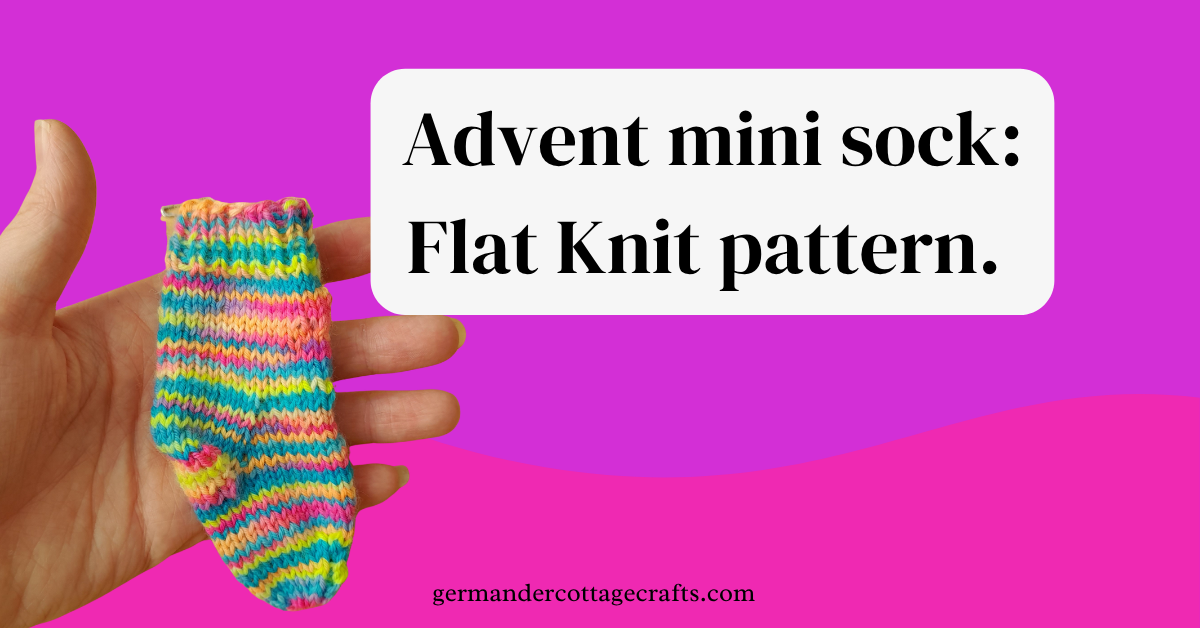
    If you’re just starting out with socks, you may find them mystifying. It doesn’t have to be that way! This mini sock knitting pattern helps you learn how a sock is made in a quick, simple way. This sock is knit from the cuff down and features an efficient square heel and a rounded toe.

    In this mini sock knitting pattern, we’ll cover:

    • Casting on in the round.
    • Knitting in the round.
    • Shaping the heel of a sock.
    • Turning the heel of a sock.
    • Knitting the foot of a sock.
    • Decreasing stitches
    • Seaming up a sock toe.

    This is a great beginner pattern for knitters wanting to make socks.

    You can knit as many of these as you like before venturing on to adult sized socks. Use up any leftovers you have, as the pattern only calls for 30g. Experiment with different colourways and stitch patterns as you grow more confident. Scroll down for the full pattern.

    Mini sock knitting pattern for beginners. Free sock knitting pattern. Advent socks. knit a mini socs. Easy sock knitting tutorials for beginners. Learn to make socks. Easy, quick knitting for Christmas. Leftover yarn projects for knitting. What to knit with my yarn leftovers.

    This is a free knitting pattern for a mini sock. This is a great pattern to use when learning to knit socks as you can study the shaping and knitting techniques without the commitment of a larger project. This pattern was originally published as part of the Advent Sock-Along KAL in 2023.

    If you would prefer to access an ad-free PDF sock knitting pattern, you can find one on Ravelry or in my Ko-Fi shop on a pay-what-you-want basis.

    There is also a Youtube video you can watch to help you with the stages below.

    Below is the sock knitting tutorial with step by step instructions. 

    Knitted from the cuff down in DK yarn, these socks promise a quick project. The gusset heel is worked without the need to pick up stitches, and the sock is finished by grafting the toe stitches together using the kitchener method.

    You will need  

    • 30g DK yarn (or hold 2 strands of leftover 4ply/fingering yarn)
    • 3mm needles, or size needed to obtain correct tension
    • (80cm-long circular for magic loop, DPNs, or two short circulars) 
    • Two stitch markers for heel shaping
    • Two stitch markers for the round (optional) 
    • Darning needle

    Tension

    24 sts and 32 rounds to 10cm/4 inches in knit stitch.

    Now, I always say to swatch but if no one will be wearing these, tension may not matter at this time. If you do care about how big the sock will be and whether you will be able to fit your favourite advent treats in it (ferrero rocher nom nom), then by all means, please go ahead and swatch! 

    Glossary 

     K Knit 
    K2togKnit two stitches together (1 stitch decreased)
    M1LPick up the bar between the stitch you have just knit and the next stitch, bringing the needle from the front to the back. Knit into the back of this stitch (1 new stitch created). 
    M1RPick up the bar between the stitch you have just knitted and the next stitch, bringing the needle from the back to the front. Knit into the front of this stitch. It should seem a bit tight when you’re trying to get your needle in. (1 new stitch created) 
    PPurl stitch 
    P2togPurl two stitches together (1 stitch decreased)
    PMPlace marker 
    PSSOPass the slipped stitch over the knitted stitch
    SKPSlip one, knit one and pass the slipped stitch over the knitted stitch (1 stitch decreased) 
    SMSlip marker 
    St(s)Stitch(es) 

    Cuff and leg

    This is where a cuff-down sock knitting pattern starts. try your best to cast on loosely, as you will need the cuff to stretch. However, you won’t be wearing this sock (probably) so don’t panic if your tension is quite tight right now.

    1. Loosely cast on 32 sts

    Set-up row: [K1, P1] to end of row, join to work in the round.

    Depending on your needles, you may want to place markers to indicate the start and centre of the round. The first half stitches are the heel, the second half the instep. Slip the markers when you come to them.

    Continue in [K1, P1] rib pattern until cuff measures 2.5 cm / 1 in.

    Knit all rounds until the leg measures 5cm / 2in from cast-on edge. 

    2. Increasing for heel: 

    Now we’re going to increase stitches for the heel. If you’re not familiar with M1L and M1R, I have a video tutorial below that you can use for reference. Take your time in this section, as you need to focus on your stitch count.

    Round 1: M1R, PM (marker 1), K16, PM (marker 2), M1L, Knit to end of round.  (2 sts increased)

    Round 2: Knit all sts. 

    Round 3: Knit to marker 1, M1R, SM, Knit to marker 2, SM, M1L, Knit to end of round.  (2 sts increased)

    Repeat rounds 2 and 3 another 2 times, until 8 new stitches have been created. 

    You now have 24 sts for the heel, 16 sts for the instep and 40 sts in total.

    3. Decreasing for the heel 

    Row 1: Knit to marker 1, SM, K11, SKP, turn, leaving the remaining stitches unworked.

    Row 2: P7, P2tog. Turn. 

    Row 3: Knit to 1 stitch before gap, SKP. Turn. 

    Row 4: Purl to 1 stitch before gap, P2tog. Turn. 

    Repeat rows 3 and 4 another 2 times. 

    You have decreased back to the original stitch count: 16 sts for both the heel and the instep, and 32 sts in total. You should be right side facing, with marker 1 on your right-hand needle. 

    ‘Fixing gaps’ round: Remove marker 1, insert needle into gap as if to make a M1R and slip the bar onto the right-hand needle, K1, PSSO, Knit to marker 2, remove marker, insert needle into gap as if to make a M1L and slip the twisted bar onto the right-hand needle, K1, PSSO, Knit to end of round. 

    4. Foot

    Knit all sts until you reach 2.5cm/1 inch before desired length. 

    5. Shaping the Toe

    Round 1: [SKP, K12, K2tog] twice. (4 sts decreased)

    Round 2: Knit to end of round. 

    Repeat rounds 1 and 2 another 2 times, until you have 20 sts in total. 

    Then repeat round 1 two more times, until you have 12 sts in total. 

    Finishing 

    Using a darning needle and kitchener method, graft the heel stitches to the instep stitches to close the toe. Use the long tail from the cast-on to graft the gap in the cuff closed. Weave in all ends. 

    Did you enjoy this mini sock knitting tutorial?

    Let me know by leaving a comment, a like, or by sharing this free knitting pattern with others on social media!

    Video Tutorial for a mini knitted sock.

    If you enjoyed this pattern, here are some more sock knitting patterns to help you to develop your skills: 

    Minis sock knitting pattern tutorial. Sock knitting pattern for beginners free. Easy sock knitting pattern tutorial. Learn to knit socks for free. Cuff down mini sock step by step tutorial.
  • There are many ways to knit socks.

    There are many ways to knit socks.

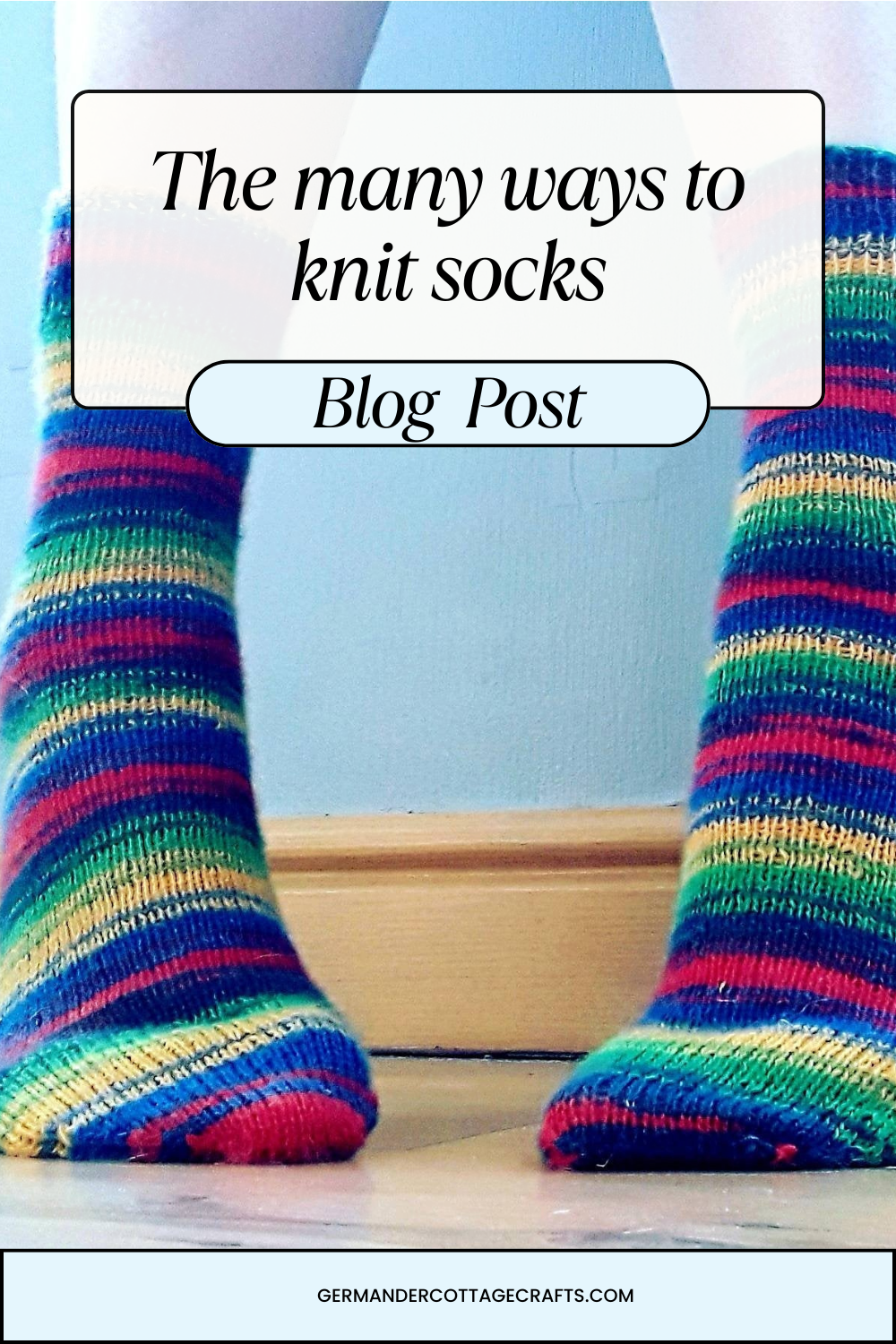
    Are you sitting down? I’m going to talk you through the many ways to knit socks. 

    Last year I received a refund request from a customer. They weren’t happy with their sock knitting kit and wanted a refund on the needles. The customer’s words were something like “there’s circular needles in here. No good for knitting socks!” 

    Let’s ignore the fact that the contents of the kit will have been clearly listed before purchase and that I am a knitwear designer and hopefully know a thing or two about knitting socks. Let’s focus on the “no good for knitting socks!” How do you know? Have you tried? 

    After talking the customer round (excuse the pun) they were willing to give the circulars a try. I introduced them to the method of magic loop knitting. They had never heard of this before. If you knit, every day is a school day. There are many, many ways to do something that achieves the same results as something else. Magic loop is just one method. 

    This article may contain affiliate links, meaning that if you choose to shop through any of the links, I do earn a small commission.

    Long circular needles (magic loop)

    Long circular needles aren’t just for hats and garments. You can use them for knitting flat as they are lighter and more compact than traditional straight knitting needles. What knitters do to make socks with long circulars is to choose circulars with a very long cable. I usually recommend 80cm or 100cm for socks. This cable is then pulled through to provide a loop on either side of the work. 

    In these photos I’m using Addi lace circulars with an 80cm cable.

    how to knit on magic loop

    I seem to find that if I was to join in the round at cast on (by pulling the cord through the halfway point of the stitches) I end up with a tangled mess and twisted stitches. This can be avoided entirely by knitting the first round in one flat row. When you have established the first row, simply pull the cord through the halfway point of stitches and carry on knitting. You will be left with the smallest of gaps at the top of the cuff but you can easily seam it closed at the end.

    Louise Tilbrook has a really handy tutorial for magic loop here

    Knitting on short circular needles 

    There are also short circulars. They’re brilliant for knitting the legs and the feet but you will need to switch to other circulars or DPNs for toe shaping. That’s not a preference thing- it’s just not physically possible to shape toes on 9 inch circulars.

    addi sockwonder short circular needles

    What I will say about the 9in circulars is that they create a tighter knit in my opinion. You definitely need to review your tension compared to when you use other methods. 

    Louise Tilbrook has a tutorial on knitting with tiny needles here. It can be hard to get to grips with them at first but if you can, it’s worth it. 

    Knitting with niche needles 

    There are also these funky little things called CraSyTrio. I think they’re awesome because they have the flexibility of the circular needle but a similar setup to double pointed needles.

    Double pointed needles

    Your experience with these will vary from “knitting ninja” to “fighting with a hedgehog” but if you persevere, I think you’ll be all right. I was wary of double pointed needles for a long time. I feared the complicated set up and when I started out, I would get myself into a tangle or lose my patience when one of the needles kept slipping off. 

    You may want to consider starting your DPN journey with something bigger like a sleeve or a hat. This will help you to practice and there’s more chance of you noticing dropped stitches with thicker yarn. 

    DPN hack: Cast on all of your stitches on one slightly larger needle. Using your smaller DPN needles, knit the set amount of divided stitches onto each needle. You will then have all stitches accounted for without having dropped your DPNs during cast on. Some patterns even tell you how many stitches to have on each needle e.g. there may be more stitches on the 3rd needle as that is the heel needle.

    If you need help choosing DPNs to knit with I have a blog post here.

     You can knit socks flat

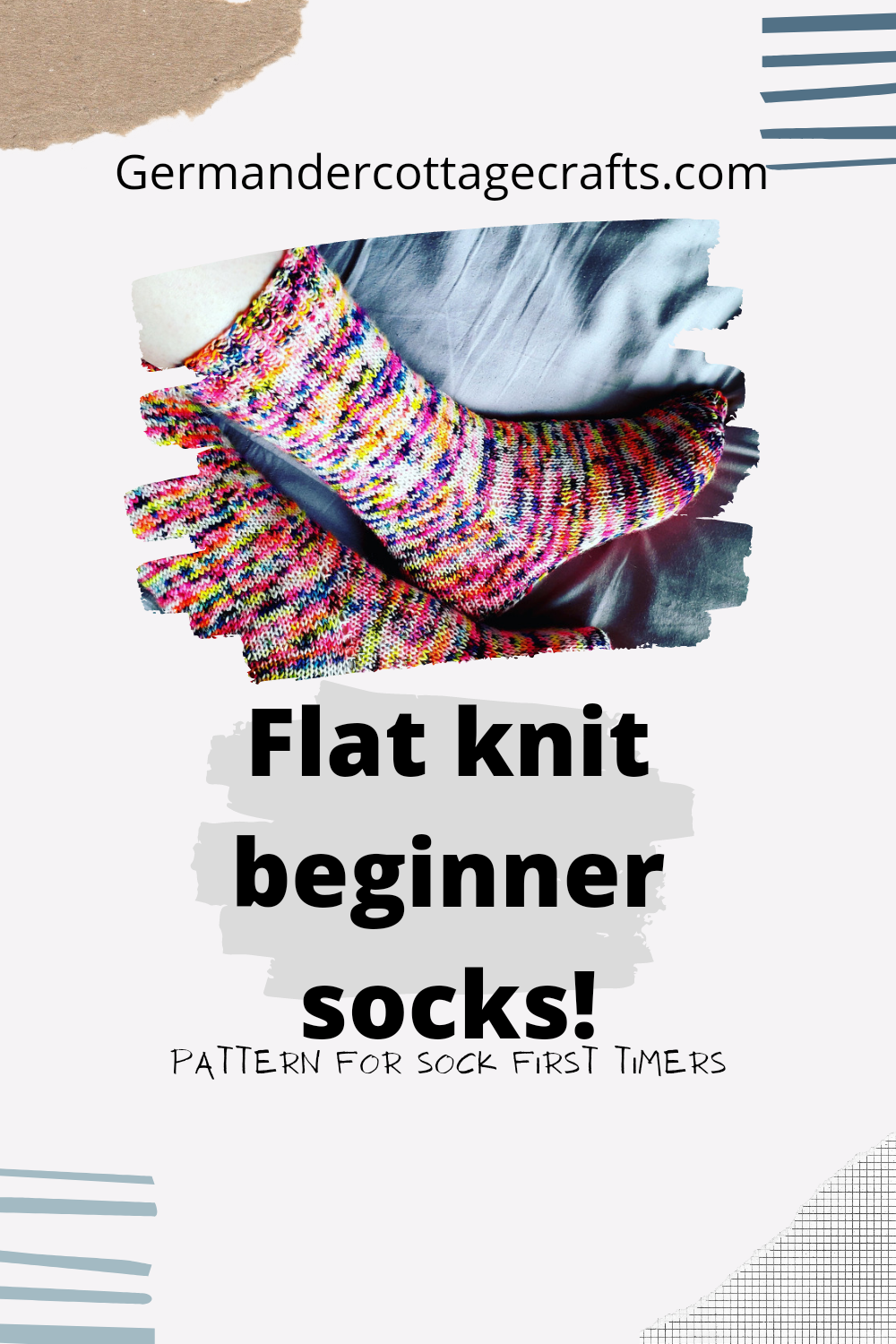
    Even though knitting socks in the round is incredibly popular, there will always be knitters who prefer knitting them flat. I believe that these knitters are often left behind when it comes to sock design. Luckily, you can get a good range of flat knit socks thanks to the internet. I have a pattern for flat knit socks here that avoids all the requirements for stitch holders and multiple seams. Just sew up one seam at the end and you’re done.

    I hope you can find the time to explore all methods or practice a favourite. 

    Hanna 

    Sock knitting patterns to try!

    Easy flat knit, two needle socks.

    The Andalusian Stitch Socks

    Simple cuff-down beginner socks.

  • How to graft the toe of your sock. Kitchener stitch tutorial.

    How to graft the toe of your sock. Kitchener stitch tutorial.

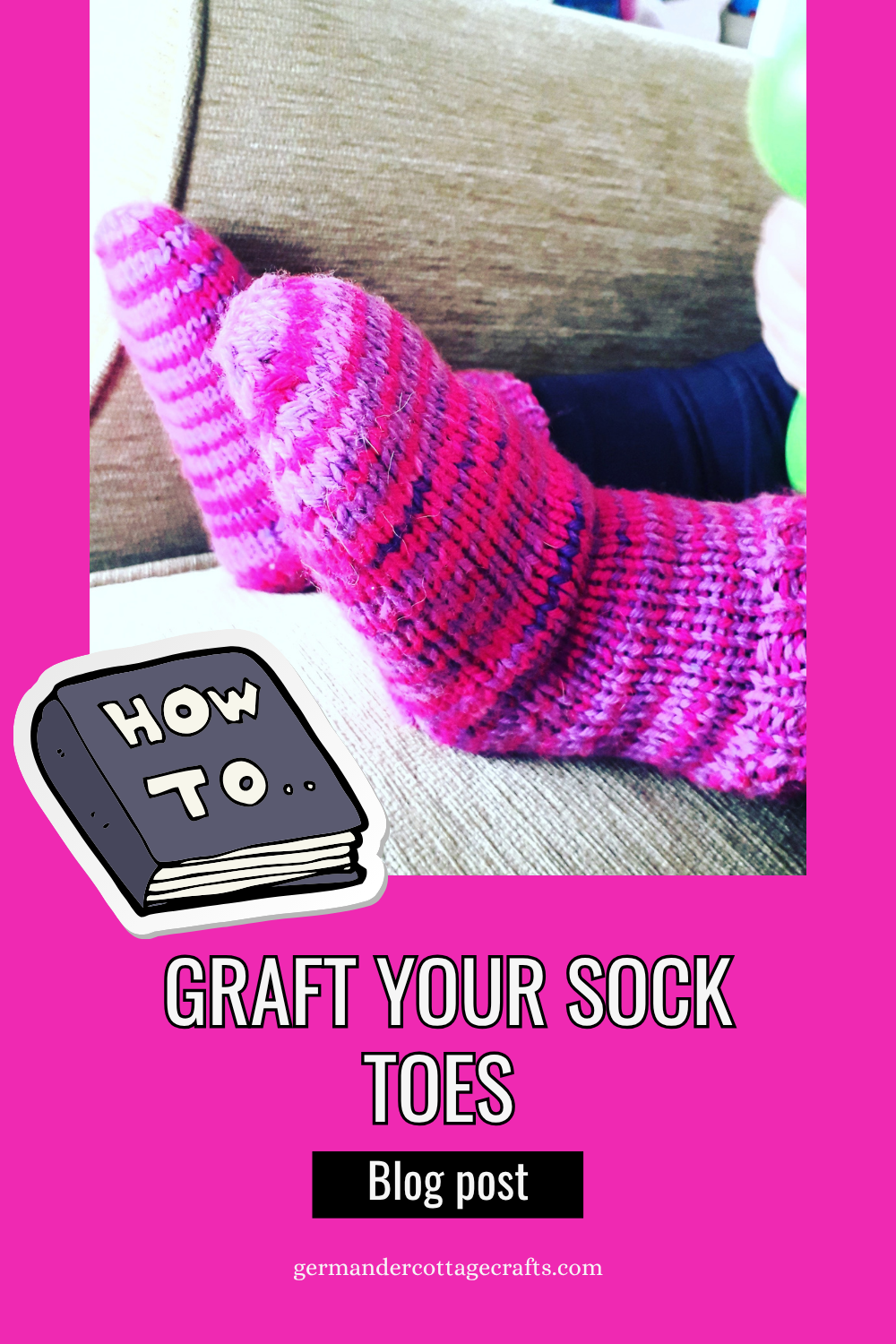
    Here’s a quick, step by step photo tutorial showing you how to graft the toe of your socks. This is a really handy technique for sock knitting and once you get used to the direction of the darning needle, you’ll be ready to cast on your next pair of socks!

    Did you know?

    This method is also known as Kitchener stitch but knitters nowadays prefer to call it grafting. You can find out why here

    Grafting, step by step.

    To start, you have to end your toe knitting with an even number of stitches and they have to be divided between two needles. You can use any needles for this part but they have to sit parallel. Make sure that the two wrong sides of your work are facing. 

    Kitchener stitch tutorial for sock knitters. For best results, split your stitches evenly across 2 needles. Free sock knitting tutorial showing you how to graft your sock toes. How to knit socks cuff down. How to knit socks in the round.

    To set up, you first need to have your darning needle to hand with your yarn tail threaded through it. 

    1. Put your darning needle through the first stitch on the front needle (the one closest to you) as if to purl and pull your yarn through. Leave the stitch on the needle. 

    2. Put your darning needle through the first stitch on the back needle as if to knit and pull your yarn through. You also need to leave that stitch on the needle. 

    How to do the kitchener stitch knitting tutorial. Kitchener stitch sock toe. How to graft the toe of your knitted sock. Learn to knit socks and graft the toe. How to seamlessly close the toe of your sock. Image shows grafting stitches with a darning needles.

    The next 4 parts of this will be repeated to the end and they are as follows:  

    3. Put your darning needle through the first stitch on the front needle knitwise, thread the yarn through and slip that stitch off the needle.

    Put your darning needle through the first stitch on the front needle knitwise, thread the yarn through and slip that stitch off the needle. Grafting tutorial for knitting beginners.

     4. Put your darning needle through the first stitch on the front needle purlwise, thread the yarn through and keep that stitch on the needle.

    How to graft the toe of your sock. Kitchener stitch tutorial. Put your darning needle through the first stitch on the front needle purlwise, thread the yarn through and leave thatt stitch on the needle.

    5. Put your darning needle through the first stitch on the back needle purlwise, thread the yarn through and slip that stitch off the needle.

    Kitchener stitch knitting tutorial. Learn how to seamlessly close your sock toes and graft the stitches together.

    6. Put your darning needle through the first stitch on the back needle knitwise, thread the yarn through. Leave that stitch on the needle. 

    Kitchener stitch tutorial step by step.

    Now repeat the last 4 steps (3-6) until you’ve closed your toe. Weave in ends and wear with pride! 

    Graft your sock toes seamlessly with this step by step photo tutorial.

    Video demonstrating the grafted toe.

    Do you still need help with grafting? Here’s a handy video from my youtube channel demonstrating how to graft the toe of a sock. The instructions are at the end of this video.

    Tip: Why not try making a series of mini socks to practise your grafting technique? They make a fun decoration for advent, too.

    I’ve put the instructions together here for you too for a Pinterest pin. Pin it for safe keeping! 

    How to do Kitchener stitch. Grafting sock toes together easy tutorial.
    How to graft sock toes closed. kitchener stitch tutorial

    Sock knitting patterns to try:

    Easy 2 needle flat knit socks patternSimple two needle flat knit sock pattern.

    Flock socks knitting pattern. Cuff down sock knitting pattern.

    The Andalusian socks. Free textured sock knitting pattern.

    Other learning resources for knitters

    • Learn how to make a head warmer (headband) with garter stitch and worsted weight yarn. This tutorial shows you how to knit a garter stitch headband in several sizes. Beginners can complete this tutorial, either using the written instructions or the accompanying video. Visit the blog post here.
    • Learn how to knit a flat knit sock. Did you know that you don’t have to knit your socks with circular needles? You can also knit them flat on two straight needles. This is my best selling sock knitting pattern that I also added as a free pattern on the blog. Click here to read it.
    • Yarn weight and why it matters. This article explores the significance of tension, gauge and why you should always test it before starting out on a knitting project. Yarn thicknesses and needles don’t always match, so I show you what to watch out for and how to get it right every time. Read the post here.
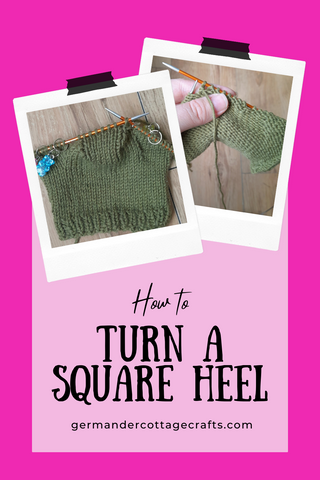
  • How to turn a square heel. Sock knitting tutorial for beginners: the Dutch heel.

    How to turn a square heel. Sock knitting tutorial for beginners: the Dutch heel.

    If you’ve been looking at sock knitting patterns and techniques lately, you may have noticed that as well as several styles of sock, there are also different styles of heels!

    I’m going to show you how to make and turn the square (Dutch) heel which is my favourite sock heel of all time. It’s such a convenient type of heel that I use it in all of my sock knitting patterns.

    In this tutorial, we’ll cover:

    • What a square heel is.
    • How it fits.
    • Why it’s a good choice for beginners.
    • Where you can practice it.
    • How to make it.
    socks with a square heel. The flock socks are slip stitch socks with an integrated dutch heel

    The flock socks (above) have a square heel.

    How is the square heel shaped and constructed?

    The square heel is shaped by making some simple increases, short row shaping and decreases. Don’t be put off by ‘short rows’ as it is simply knitting to a gap, turning around and knitting back to the next gap. It’s very easy to do once you understand the basics. I use M1R and M1L to increase the stitches. 

    Where does a square heel sit? Is it comfortable? 

    A square heel sits just under the heel of your foot. As the skin is usually harder here, I wouldn’t say that you can feel the edges of the heel underfoot. This experience could be different for you though! Some people who have a higher instep might prefer a bigger heel such as the flap and gusset heel but I’d still recommend trying all heels before your write any of them off. 

    This square heel is a neat convenient sock heel and is quite hard wearing too. If you just want a pair of classic knit socks that are a workhorse through cooler months, you have to try this heel. 

    Is there a heel flap and gusset? 

    Not quite. Increasing for the heel takes place as you are knitting the sock leg. That’s the gusset part! There is some flat knitting involved (knit on the right side and purl on the wrong side) when actually turning the heel but you never come away from the rest of the sock. There is no need to pick up any stitches along the sides of the heel. It is integrated into the sock. When it comes to decreasing back down to your original stitch count, you just make some decreases and some careful slipping of stitches to ensure that you don’t create any holes. 

    Is the square heel adjustable? 

    Yes, it is. Just add a stitch either side until you get to the desired width or if you have narrower heels, don’t increase as often as the pattern tells you to. 

    Here’s how to do a square heel. This example is from the advent mini sock pattern which can be found here. 

    This example heel is from my free sock knitting pattern here. 

    Increasing for heel: 

    Round 1: M1R, PM (marker 1), K16, PM (marker 2), M1L, Knit to end of round.  (2 sts increased)

    How to work a square sock heel. Dutch sock heel tutorial.

    Round 2: Knit all sts. 

    Round 3: Knit to marker 1, M1R, SM, Knit to marker 2, SM, M1L, Knit to end of round.  (2 sts increased)

    Repeat rounds 2 and 3 another 2 times, until 8 new stitches have been created. 

    Increase stitches either side of the markers to make the square heel.

    You now have 24 sts for the heel, 16 sts for the instep and 40 sts in total.

    Decreasing for the heel 

    Row 1: Knit to marker 1, SM, K11, SKP, turn, leaving the remaining stitches unworked.

    Short row sock heels. Dutch or square heel. Square heel shaping tutorial.

    Row 2: P7, P2tog. Turn. 

    Square heel tutorial. Work on the wrong side to do the purl decreases.

    Row 3: Knit to 1 stitch before gap, SKP. Turn. 

    Row 4: Purl to 1 stitch before gap, P2tog. Turn. 

    Repeat rows 3 and 4 another 2 times. 

    There you have it- a square heel. 

    You have decreased back to the original stitch count: 16 sts for both the heel and the instep, and 32 sts in total. You should be right side facing, with marker 1 on your right-hand needle. 

    ‘Fixing gaps’ round: Remove marker 1, insert needle into gap as if to make a M1R and slip the bar onto the right-hand needle, K1, PSSO, Knit to marker 2, remove marker, insert needle into gap as if to make a M1L and slip the twisted bar onto the right-hand needle, K1, PSSO, Knit to end of round. 

    Thank you for supporting my work. As you know, I don’t run ads on my blog posts. If you’d like to show your support by leaving a tip, you can do so at Ko fi here. Thank you for visiting my blog!

    Mini sock knitting tutorial here:

    How to make a square heel. Dutch heel sock knitting tutorial. Easy square heel for socks
  • Easy 2 needle flat knit socks pattern

    Easy 2 needle flat knit socks pattern

    Do you love the idea of cosy, hand-knit socks but dread the complicated process of using four or five double-pointed needles? Knitting socks can be intimidating for even the most experienced knitter. If you’re looking for something that will build your confidence, look no further!

    In this article, we will explore the method of knitting socks flat on just two straight needles. Yes, you read that right – no circular needles or DPNs required! Whether you are a beginner knitter or an experienced one looking for a new challenge, this method will revolutionise your sock-making game. Say goodbye to pesky stitches falling off the needles and hello to a simpler, more manageable knitting experience. Get ready to dive into the world of flat-knit socks and discover the endless possibilities.

    This simple two needle flat knit socks pattern is a straightforward, simple way to learn the basic construction of a sock. Many knitters are hesitant to try socks on double pointed or circular needles, so I designed this pattern as a confidence builder. This pattern also covers the square heel, which is my favourite type of sock heel: The Square heel. Here’s a video showing you how to knit this heel:

    This is a free pattern for two needle socks knit flat. You can either use the blog pattern for free, or if you’d like, here’s the easy PDF for your own convenience.

    Simple two needle beginner sock pattern. Knit your socks flat on two straight needles. Easy free sock pattern for beginners. Knit your socks on two needles. Easy sock patterns for beginners.

    Whether you are looking to try a different construction for socks or you simply prefer knitting flat, these socks are for you. No side, toe or heel seams are required; just one simple seam up the front of the sock. The heel is worked using short rows and the toe consists of a drawstring finish. 

    Materials required to make these flat knit socks: 

    60g (70g, 90g) of 4ply sock yarn. 

    Yarn used in socks pictured is Gamer Crafting Sock 4-ply [75% Merino, 25% Nylon, 400m per 100g] in ‘Pride Was A Riot’. 

    2mm and 2.5mm needles (or size needed to obtain gauge) for working flat.

    4 stitch markers. 

    Darning needle. 

    Gauge: 

    32 sts and 38 rows to 10cm/4 inches in stocking stitch on larger needles.

    Finished Foot/Leg Circumference: 

    Size 1: 17.5cm/7 inches

    Size 2: 20cm/8 inches

    Size 3: 22.5cm/9 inches

    Sample shown in size 2.
    Length of leg from cuff to heel is 24cm/9.5 inches.

    Foot length from back of heel to toe is 24cm/9.5 inches.

    Glossary:  

    K: Knit

    K2tog: Knit two stitches together. (1 stitch decreased)

    M1L: Pick up the bar between the stitch you have just knitted and the next stitch, bringing the needle from the front to the back. Knit into the back. (1 stitch increased)

    M1R: Pick up the bar between the stitch you have just knitted and the next stitch, bringing the needle from the back to the front. Knit into the front. (1 stitch increased)

    P: Purl

    P2tog: Purl two stitches together. (1 stitch decreased)

    PM: Place marker

    PSSO: Pass slipped stitch over

    RS: Right side of work

    SKP: Slip one stitch knitwise, knit one stitch, pass slipped stitch over knitted stitch. (1 stitch decreased)

    SM: Slip marker

    SSK: Slip two stitches separately knitwise to right-hand needle, knit them together through the front of the stitches. (1 stitch decreased) 

    St(s): Stitch(es)

    WS: Wrong side of work

    Cast on your flat knit socks.

    Leg 

    With smaller needles, cast on 56 (64, 72) sts. 

    Rib row: [K1, P1] to end of row.

    Repeat Rib row to work 1×1 rib until cuff measures 5cm/2 in, ending after a WS row. 

    Switch to larger needles. 

    Work stocking stitch (knit on RS, purl on WS) until leg measures 18.5cm/7.25 in from cast-on edge, ending after a WS row.

    Next, it’s time to shape the heel. Pay close attention to this part because if you don’t have the right amount of stitches, your heel won’t sit right.

    RS: K14 (16, 18), PM (marker 1), M1R, PM (marker 2), K28 (32, 36), PM (marker 3), M1L, PM (marker 4), K to end. 

    WS: P all sts. 

    RS: K to marker 1, SM, K to marker 2, M1R, SM, K to marker 3, SM, M1L, K to marker 4, SM, Knit to end. 

    WS: P all sts. 

    Repeat last 2 rows another 8 (9, 10) times, until you have increased 10 (11, 12) sts on either side of the heel markers, ending after a WS row. 76 (86, 96) sts in total. 

    Now, turn the heel with short rows. See the video above if you’re still unsure about this part.

    RS: K to marker 1, SM, K to marker 2, SM, K17 (20, 23), SKP. Turn work.

    WS: P7 (9, 11), P2tog. Turn.

    RS: K to 1 stitch before the gap which has formed, SKP. Turn. 

    WS: P to 1 stitch before gap, P2tog. Turn. 

    Repeat last 2 rows another 8 (9, 10) times, until there are 28 (32, 36) heel sts between markers 1 and 4, ending after a WS row. This is the number of heel stitches you started with; your work will be RS facing with marker 2 on your right-hand needle.

    Knitting the foot of your flat knit sock.

    Remove marker 2. Insert needle as though making a M1R but instead of knitting, slip the twisted stitch on to right-hand needle. K1 and PSSO. K to marker 3, remove marker, insert needle as though making a M1L but slip the twisted stitch onto left-hand needle and K2tog. K to marker 4, SM, K to end. 

    You can remove markers 1 and 4 while you work the foot; you will need them again when you reach the toe.

    Work rest of foot in stocking stitch until it measures 5 (6, 6.5)cm/2 (2.25, 2.5) in less than desired length. 

    It’s time to shape the toe of your sock.  

    RS: K12 (14, 18), SSK, PM, K2tog, K22 (28, 28), SSK, PM, K2tog, K to end. (4 sts decreased) 

    WS: P all sts.

    RS: K to 2 sts before marker, SSK, SM, K2tog, K to 2 sts before marker, SSK, SM, K2tog, K to end.
    (4 sts decreased)

    WS: P all sts. 

    Repeat last 2 rows another 8 (10, 11) times, until there are 16 (16, 20) sts in total. 

    Finishing your sock

    Cut a long tail of yarn and, with a darning needle, thread tail through remaining sts and pull tight to close. Then, using mattress stitch, seam up the front of the sock. Weave in yarn ends.

    I hope you enjoy your new, flat knit socks. Let me know how you get on in the comments.

    Flat knit sock pattern. Easy socks on two needles free pattern. Knitting socks for beginners.

    Feeling confident?

    You can stay here if you’re feeling happy with your flat knit socks. However, there is the option to progress to knitting in the round! I have a pattern for an adult size sock or a smaller, novelty sock that can also be used for babies. If you’d like to try, you can have a go at knitting socks in the round.

    In conclusion, knitting socks flat on two needles may seem intimidating at first, but with the right techniques and practice, anyone can master this traditional method. We have explored the benefits of knitting socks flat, including the ability to customize and adjust sizing, as well as the convenience of not needing double-pointed needles. By following the step-by-step instructions and tips shared in this article, you can create a comfortable and stylish pair of socks that will keep your feet warm and cozy. As writer Elizabeth Zimmermann once said, “Knit on with confidence and hope, through all crises.” So go ahead and give it a try, and see the magic of knitting unfold right before your eyes. Keep learning and experimenting, and embrace the joy of creating something unique and handmade. Happy knitting!