Category: Knitting and crochet

Learn to crochet.  Learn to knit. Knitting and crochet patterns and tutorials. Find the best yarns to use for your crochet and knitting projects.

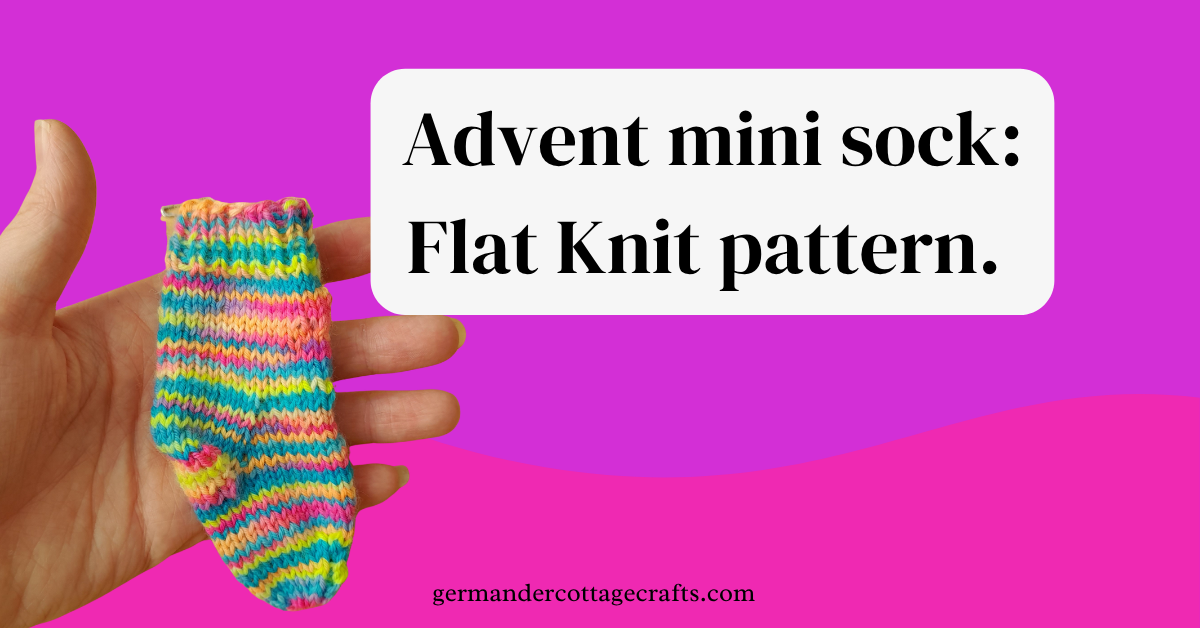
  • Free sock pattern: Advent mini sock knitting pattern.

    Free sock pattern: Advent mini sock knitting pattern.

    Advent mini sock

    If you’re just starting out with socks, you may find them mystifying. It doesn’t have to be that way! This mini sock knitting pattern helps you learn how a sock is made in a quick, simple way. This sock is knit from the cuff down and features an efficient square heel and a rounded toe.

    In this mini sock knitting pattern, we’ll cover:

    • Casting on in the round.
    • Knitting in the round.
    • Shaping the heel of a sock.
    • Turning the heel of a sock.
    • Knitting the foot of a sock.
    • Decreasing stitches
    • Seaming up a sock toe.

    This is a great beginner pattern for knitters wanting to make socks.

    You can knit as many of these as you like before venturing on to adult sized socks. Use up any leftovers you have, as the pattern only calls for 30g. Experiment with different colourways and stitch patterns as you grow more confident. Scroll down for the full pattern.

    Mini sock knitting pattern for beginners. Free sock knitting pattern. Advent socks. knit a mini socs. Easy sock knitting tutorials for beginners. Learn to make socks. Easy, quick knitting for Christmas. Leftover yarn projects for knitting. What to knit with my yarn leftovers.

    This is a free knitting pattern for a mini sock. This is a great pattern to use when learning to knit socks as you can study the shaping and knitting techniques without the commitment of a larger project. This pattern was originally published as part of the Advent Sock-Along KAL in 2023.

    If you would prefer to access an ad-free PDF sock knitting pattern, you can find one on Ravelry or in my Ko-Fi shop on a pay-what-you-want basis.

    There is also a Youtube video you can watch to help you with the stages below.

    Below is the sock knitting tutorial with step by step instructions. 

    Knitted from the cuff down in DK yarn, these socks promise a quick project. The gusset heel is worked without the need to pick up stitches, and the sock is finished by grafting the toe stitches together using the kitchener method.

    You will need  

    • 30g DK yarn (or hold 2 strands of leftover 4ply/fingering yarn)
    • 3mm needles, or size needed to obtain correct tension
    • (80cm-long circular for magic loop, DPNs, or two short circulars) 
    • Two stitch markers for heel shaping
    • Two stitch markers for the round (optional) 
    • Darning needle

    Tension

    24 sts and 32 rounds to 10cm/4 inches in knit stitch.

    Now, I always say to swatch but if no one will be wearing these, tension may not matter at this time. If you do care about how big the sock will be and whether you will be able to fit your favourite advent treats in it (ferrero rocher nom nom), then by all means, please go ahead and swatch! 

    Glossary 

     K Knit 
    K2togKnit two stitches together (1 stitch decreased)
    M1LPick up the bar between the stitch you have just knit and the next stitch, bringing the needle from the front to the back. Knit into the back of this stitch (1 new stitch created). 
    M1RPick up the bar between the stitch you have just knitted and the next stitch, bringing the needle from the back to the front. Knit into the front of this stitch. It should seem a bit tight when you’re trying to get your needle in. (1 new stitch created) 
    PPurl stitch 
    P2togPurl two stitches together (1 stitch decreased)
    PMPlace marker 
    PSSOPass the slipped stitch over the knitted stitch
    SKPSlip one, knit one and pass the slipped stitch over the knitted stitch (1 stitch decreased) 
    SMSlip marker 
    St(s)Stitch(es) 

    Cuff and leg

    This is where a cuff-down sock knitting pattern starts. try your best to cast on loosely, as you will need the cuff to stretch. However, you won’t be wearing this sock (probably) so don’t panic if your tension is quite tight right now.

    1. Loosely cast on 32 sts

    Set-up row: [K1, P1] to end of row, join to work in the round.

    Depending on your needles, you may want to place markers to indicate the start and centre of the round. The first half stitches are the heel, the second half the instep. Slip the markers when you come to them.

    Continue in [K1, P1] rib pattern until cuff measures 2.5 cm / 1 in.

    Knit all rounds until the leg measures 5cm / 2in from cast-on edge. 

    2. Increasing for heel: 

    Now we’re going to increase stitches for the heel. If you’re not familiar with M1L and M1R, I have a video tutorial below that you can use for reference. Take your time in this section, as you need to focus on your stitch count.

    Round 1: M1R, PM (marker 1), K16, PM (marker 2), M1L, Knit to end of round.  (2 sts increased)

    Round 2: Knit all sts. 

    Round 3: Knit to marker 1, M1R, SM, Knit to marker 2, SM, M1L, Knit to end of round.  (2 sts increased)

    Repeat rounds 2 and 3 another 2 times, until 8 new stitches have been created. 

    You now have 24 sts for the heel, 16 sts for the instep and 40 sts in total.

    3. Decreasing for the heel 

    Row 1: Knit to marker 1, SM, K11, SKP, turn, leaving the remaining stitches unworked.

    Row 2: P7, P2tog. Turn. 

    Row 3: Knit to 1 stitch before gap, SKP. Turn. 

    Row 4: Purl to 1 stitch before gap, P2tog. Turn. 

    Repeat rows 3 and 4 another 2 times. 

    You have decreased back to the original stitch count: 16 sts for both the heel and the instep, and 32 sts in total. You should be right side facing, with marker 1 on your right-hand needle. 

    ‘Fixing gaps’ round: Remove marker 1, insert needle into gap as if to make a M1R and slip the bar onto the right-hand needle, K1, PSSO, Knit to marker 2, remove marker, insert needle into gap as if to make a M1L and slip the twisted bar onto the right-hand needle, K1, PSSO, Knit to end of round. 

    4. Foot

    Knit all sts until you reach 2.5cm/1 inch before desired length. 

    5. Shaping the Toe

    Round 1: [SKP, K12, K2tog] twice. (4 sts decreased)

    Round 2: Knit to end of round. 

    Repeat rounds 1 and 2 another 2 times, until you have 20 sts in total. 

    Then repeat round 1 two more times, until you have 12 sts in total. 

    Finishing 

    Using a darning needle and kitchener method, graft the heel stitches to the instep stitches to close the toe. Use the long tail from the cast-on to graft the gap in the cuff closed. Weave in all ends. 

    Did you enjoy this mini sock knitting tutorial?

    Let me know by leaving a comment, a like, or by sharing this free knitting pattern with others on social media!

    Video Tutorial for a mini knitted sock.

    If you enjoyed this pattern, here are some more sock knitting patterns to help you to develop your skills: 

    Minis sock knitting pattern tutorial. Sock knitting pattern for beginners free. Easy sock knitting pattern tutorial. Learn to knit socks for free. Cuff down mini sock step by step tutorial.
  • How to create crochet fabric that drapes.

    How to create crochet fabric that drapes.

    In this post, I’ll be talking about drape in crochet and how you can make a few simple tweaks to ensure your crochet fabric hangs as you want it to.

    You may have heard that crochet fabric doesn’t look as good as knit fabric. Did you know that it can? Here I will explain how to create fabric that drapes!

    If you’re a frequent knitter and you’ve dabbled with crochet, one of the main observations you may have made is the difference in drape. You may have heard knitters say that they don’t like the ‘stiff’ fabric that crochet produces, but I want to tell you that it doesn’t have to be stiff and boxy. Here I will show you how to create crochet fabric that drapes well. 

    What is drape and why does it matter in crochet?

    Drape is the way that a fabric flows or hangs. It allows it to sweep, gather or float off the body or sway in the wind. It’s gorgeous and it is absolutely what we want when it comes to shawls and garments. Think of chiffon sarongs, velvet curtains or lace shawls. How something drapes is down to a few factors of which I will explain below. 

    Semi circle crochet shawl pattern Eden cottage yarns nateby 4ply

    Example above: The Daphne shawl.

    As a rule, crochet stitches do tend to produce a thicker, denser fabric as the method of crochet requires wrapping and ‘knotting’ in the way the stitches are formed. If we were to compare crochet fabric with knit fabric according to the recommended hook and needle sizes on a ball band, the crochet will most probably be thicker, but this does not mean that crochet fabric is always stiff and dense. It is a common misconception that crochet fabric makes rubbish garments and that it is always stiff. 

    You can create drape with crochet fabric and it doesn’t just have to be with lace and openwork. 

    There are many ways that you can create looser, draping fabric with crochet that doesn’t have to result in it being completely see through and vulnerable to door handles. 

    This could be done in several ways: 

    1. The size of the crochet hook used. 
    2. The direction of the stitches e.g. vertical is less see through than horizontal. 
    3. The thickness of the yarn. 
    4. The stitch pattern. 
    5. The yarn used. Some yarns are just softer and have more drape, or a thinner feel to them. Not all 4ply and DK is the same thickness, for example. 
    6. Blocking. 

    Size matters when creating drape.

    If you use the crochet hook size recommended on the ball of yarn, I can almost guarantee that you will end up with a dense fabric. If you go up half a millimetre or a full millimetre, it will become a looser fabric. You can keep experimenting with this until you get to a hook size that creates the drape you want.

    Single crochet stitch is too dense for drape

    Horizontal vs vertical can improve your results when creating drape in crochet fabrics. 

    If you turn a crochet piece on its side, the layout of the stitches and the drop changes. This could help with drape too (depending on yarn). 

    Thickness of the yarn can affect drape 

    Using an aran or chunky yarn will cause problems if you don’t go up a hook size. If you have loose enough tension, you can get away with the recommended hook size, but if you can’t, you need to increase your hook size. Here is an example of a chunky/bulky weight yarn that has drape in a cardigan. 

    Chunky crochet cardigan pattern

    Believe it or not, you can get chunky weight yarn to drape. Creating crochet fabric that drapes with chunky yarn may seem unlikely but it is possible. Above is my Starburst crochet cardigan pattern and although it asks for chunky yarn and a 6mm hook, it has drape! It hangs off the body and the sleeves drape too. It is not a stiff jacket, it’s a cardigan. Bear in mind that although the pattern may ask for a specific size, you will know from your test square whether the finished item will drape how it is supposed to or not. Most makers will achieve the desired fabric if they go up a hook size, as my tension seems to be quite loose! You should always test your personal tension with the yarn to see if the yarn is thin or thick enough! 

    The stitch pattern used will affect the finished result. 

    The stitch pattern you use affects drape considerably. For example, double (UK treble) crochet is a longer, looser stitch than its predecessor, the single crochet stitch. 

    Single crochet (UK Double) is also the most dense stitch you can make. It is therefore brilliant for items that require structure, stiffness or an opaque, tight fabric. Here are some examples of where single crochet works wonders: 

    • amigurumi (pictured below)
    • baskets
    • bags
    • rugs 
    • hard wearing throws e.g. dog blankets 
    • Pet beds 
    • Bath mats
    • Face scrubbies 
    • Pouches and cases 
    Martia alien amigurumi crochet doll uses single crochet stitch

    It’s not just single crochet that will cause stiffness though. 

    Using any stitch can cause stiffness. All you have to do is use a crochet hook a couple of sizes smaller than the yarn recommends. It works just the same with knitting. 

    Yarns 

    We have briefly covered the yarn and the recommended sizes that come on the ball band. In my experience, the ball band isn’t always correct. This is because they are a guide rather than an absolute. That ball band does not take into account what your personal tension is. I was also saying that not all 4ply or DK yarns are the same. This is where wraps per inch (wpi) comes in handy. I will explain further in another blog post, but basically: 

    Working out WPI: 

    Wrap your yarn around a pencil or a pair of knitting needles for 3-4 inches. Using a ruler, measure how many wraps per inch. This gives you a clear idea of how thick your yarn actually is.  Although Cygnet boho spirit says it is DK, the recommended hook/needle is 4.5-5mm. If I were to work out wpi with Cygnet boho and Cygnet DK, they would be different thicknesses. 

    Blocking creates drape!

    If you are using natural fibres, blocking is invaluable for altering the drape and the feel of the finished item. It can help it to hold it’s shape and open out any stitches that are deliberately loose e.g. lace stitches. You can also block acrylic by ‘killing’ the fabric with steam or a warm iron just hovering above it, but most of the time, acrylic can drape if you just use the right hook. 

    Overall, I think experimenting with crochet and trying out crochet drape is worth the time. I don’t think knitters should shy away from crochet because the stitches are different.

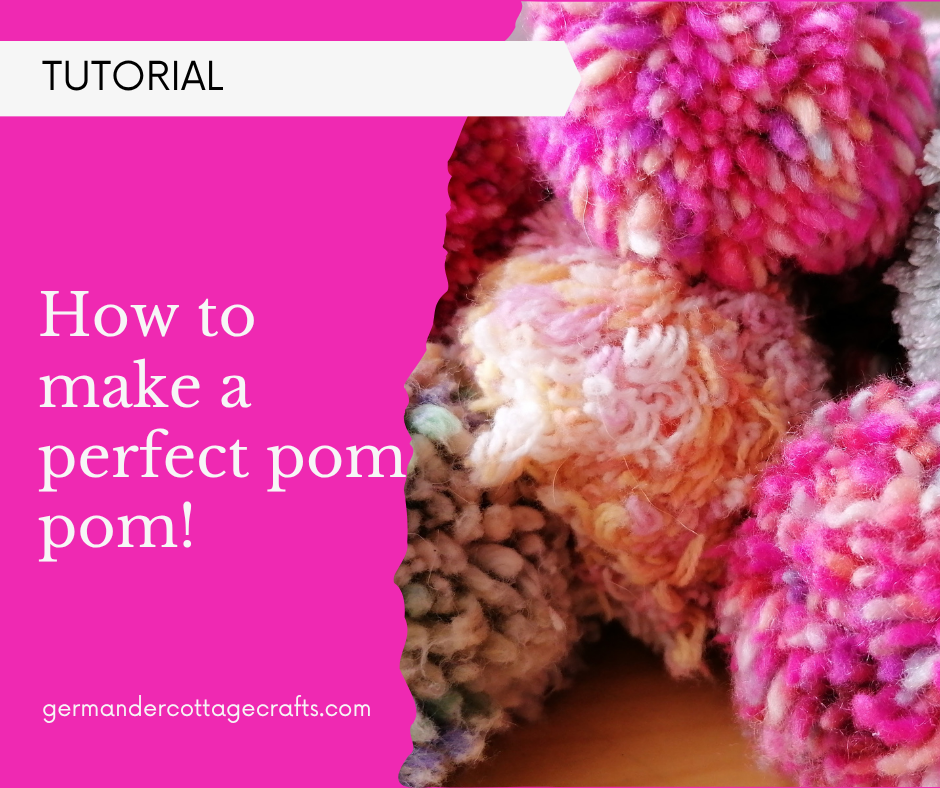
  • How to make pom poms. Making pom poms and choosing the best pom pom maker.

    How to make pom poms. Making pom poms and choosing the best pom pom maker.

    Disclosure: This post may contain affiliate links, meaning I get a commission if you decide to make a purchase through my links, at no cost to you.

    In this post I’m going to show you how I make perfectly round, full pom poms for hats and other craft projects. Pom poms can be notorious for falling apart or falling off after a few wears but I’m going to show you how I make them tightly, securely and in a way that ensures they’re full and easy to attach. 

    I’ll also show you the tools I recommend for making your own pom poms with a standard pom pom maker or a novelty style pom pom maker.

    First, let’s talk about what you will need and why. 

    Do I need a good pom pom maker? 

    This is entirely subjective as I believe the technique is more important than the kit you use but saying that, using a great pom pom maker will help. I’m using a Knitpro pom pom maker for this tutorial. You can use two pieces of card if you would prefer but this method I have used here is the best way for me. I’ve made several pom poms over the years and I keep coming back to the pom pom maker because: 

    1. It’s accessible. 

    2. I don’t need to find new cardboard each time I want a pom pom. 

    3. It’s ready to use every time you need it. 

    Here’s my favourite pom pom maker, the Knitpro (known as knitters pride in the US) maker. Click here to shop for the pom pom makers that I used. 

    Knitpro pom pom maker. Make pompoms easily

    Pom poms are always shown as very fluffy, poofy additions to handmade hats. I’m going to show you how to make the best pom pom you can. 

    Here’s what you actually need to make a great pom pom: 

    1. A pom pom maker. You can use any maker (I’ve recommended some in this guide). Just choose something that you find easy to use. 

    2. Sharp, sharp scissors. The best scissors for this job are fabric scissors. I used Fiskars scissors which can be found here

    3. A darning needle. 

    4. At least 25g of good quality yarn. 

    Why is yarn important?

    How the yarn has been plied  (how many strands were twisted to make the yarn) will matter when it comes to making pom poms. For example, a 2ply yarn (as in, plied twice, not 2ply weight) will tend to be looser with a roving texture. This doesn’t make for good pom pom yarn as it can come apart when you are pulling tightly and wrapping it around the pom pom maker. 

    The higher the ply, the stronger the yarn. 

    For this tutorial I am using 50g of 4ply yarn. It’s a merino yarn with 25% nylon and it is known as a good all rounder and is plied to ensure that it does not easily break when it meets some tension. 

    The best pom poms you will ever make. Easy pom pom tutorial for beginners

    You need really strong yarn as you want something that can be pulled tightly without breaking. The fabric scissors will handle them when you come to cut your pom pom.

    How to make a pom pom, step by step.

    • Step 1:

    Set up and open up your maker.  You should have received instructions for this in your package.

    Learn how to make beautiful pompoms
    • Step 2:

    Using your thumb to hold the tail end of the yarn in place, start winding back and forth until the arm is covered. It can take a while, but be patient. It’ll be worth it!

    How to use a pompom maker
    • Step 3:

    Wind the yarn until the hard edges of the maker are softened. At least 1mm of yarn thickness required. You shouldn’t be able to feel the edges of the maker when you press it between your thumb and forefinger.

    • Step 4:

    Open up the other pair of arms and start wrapping yarn around them. 

    Step 5: Cover the second pair of arms in the same way. 

    Top tips for making amazing pom poms
    • Step 6:

    When you’re happy with the thickness of the yarn wrap, it’s time to cut. 

    • Step 7:

    Take your fabric scissors and cut, making sure that your scissors are placed in the groove of the maker. Cut all edges, making sure there are no uncut threads. 

    How to make pompoms with the knitpro pompom maker. Easy pom pom maker tool
    • Step 8:

    Cut about 30cm (12in) of yarn. Tie it around the pom pom. Come around and tie the other side too and then finish with another tie and a knot. Make sure that you have tied the pom pom as tightly as you can. 

    Knitters pride pom pom maker for easy pom poms.
    How to secure pom poms to stop them from falling apart.
    Tie your pom poms tightly
    • Step 9:

    Release the pom pom and trim to size. Your pom pom should feel full, tightly secured and heavy. 

    Make a perfect pom pom with a maker and yarn
    How to make a full, neat, beautiful pom pom

    If you want to know how to securely attach your pom pom to a hat, you can see the full video tutorial here: 

    Other makers to try in order to make great pom poms:

    Benecreat wood pom pom makers.

    These pom pom makers are similar to the classic style that we make out of card and cardboard, but as they’re wood, they last longer! You get 12 pieces in the set so it’s great value for a lot of different pom pom sizes. What I also like about this pom pom maker set is how the pieces are flat, meaning they store flat!

    The pom pom loom maker.

    This particular set is from woojfcang. These styles of maker have actually been praised for their ease of use for arthritic hands. There are no tricky parts to put together, making this pom pom maker one of the most accessible on the market.

    What else I like about this style of maker is that it is a flat shape that can store really well in your craft bag. No pieces will come off or go missing, either. I have children, so I’ve lost half of my pom pom maker a few times!

    This particular tool doubles as a tassel maker. It’s perfect for a range of crafts.

    Easy pom pom makers for arthritic hands. The image shows a pom pom loom tool. Pom pom makers for children. The best pom pom makers to buy.

    Novelty pom pom makers

    Youngwier Heart Pom Pom Maker

    I not doubt for a second that with some trimming of a regular pom pom, you could shape your own hearts but having done that myself, it’s messy and if you’re not well practised in topiary or hairdressing, you can mess it up! I have a heart pom pom maker.

    Bear with me on this: when you first cut and release the yarn from this pom pom maker, it will just look like a regular pom pom at first. You will see though that it is slightly uneven. You then trim it to shape without having to guess, because it comes with instructions!

    How to make good pom poms. Great pom poms for beginners. Learn to make a pom pom with yarn and a pom pom maker.
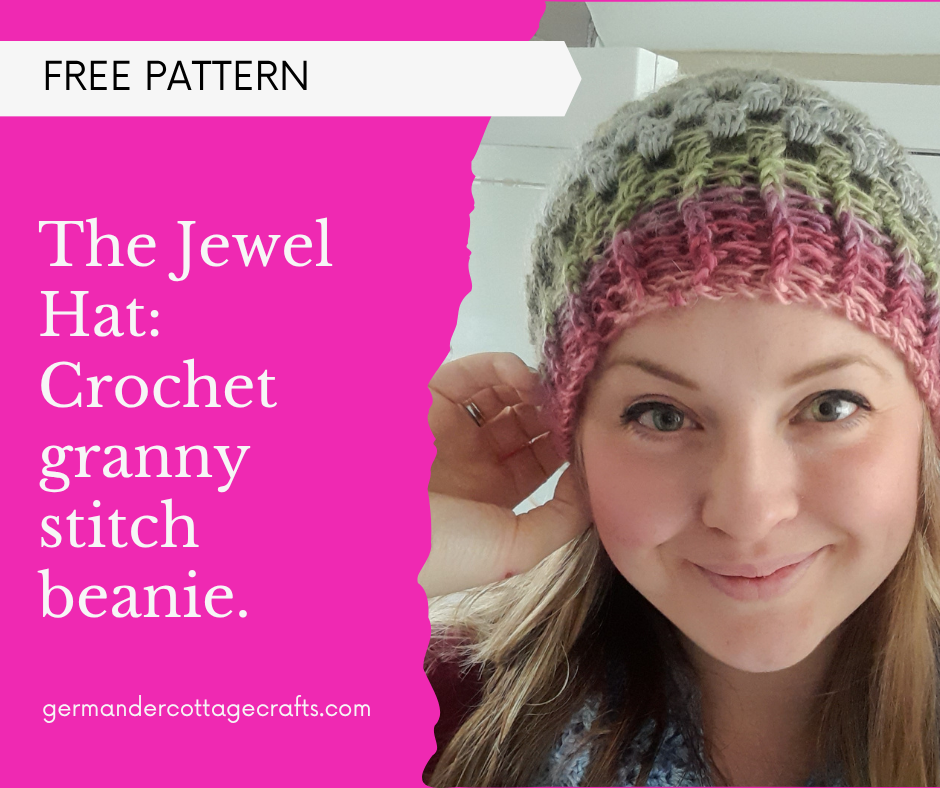
  • The Jewel Hat: Crochet Beanie Granny Stitch Pattern.

    The Jewel Hat: Crochet Beanie Granny Stitch Pattern.

    Jewel hat crochet beanie (100% crochet version)

    This is the little sister of the Jewel Hat, with the main difference being that the hat is 100% crochet construction. FpHdc and BpHdc create a ribbed brim and bobble stitches create clusters of jewel like shapes across the hat. Add a pom pom for extra enjoyment.

    If you’d prefer an ad-free version of this pattern, the PDF is available on Ravelry.

    This pattern contains affiliate links, meaning that if you do choose to buy any of the recommended supplies, I earn a small commission at no extra cost to you.

    All terms are in US terms. If you don’t know your crochet terms, I have a handy guide here.

     Materials 

    • 75g, (100g, 125g)/ 3oz/3.5oz/4oz of worsted weight yarn such as Malabrigo Worsted or Cygnet Boho Spirit. ( 240m/262yds/ 100g.) Measurement includes pom pom.
    • 5mm/ I-9 crochet hook or size needed to obtain gauge.
    • Darning needle to weave in ends.
    • Pom pom maker (optional).

    Gauge: 

    Rib: 16 Hdc sts and 24 rounds per 10cm (4in) 

    Body: 6 bobble stitches and 7 rounds per 10cm (4in) 

    To fit head size up to:

    1. Small adult: 22 inches/ 55cm
    2. Medium adult: 24 in/60cm
    3. Large adult. 25 in/64cm

    All crochet terms are US crochet terms unless otherwise stated. 

    worsted weight crochet beanie pattern. Image shows a granny stitch cluster hat.

    Jewel hat crochet beanie in size M using Cygnet Boho Spirit in Dream. 

    Glossary: 

    Back post HdcYarn over, insert hook from back to front to back around post of stitch below, yarn over and pull up a loop, yarn over and pull through all 3 loops on hook.
    Bobble stYarn over, insert hook, pull through loop, yarn over and pull through 2 loops on hook, leaving 2 loops on hook unworked.. Yarn over and insert hook into same stitch, pull through loop, yarn over pull through 2 loops. 3 loops left on hook. Yarn over, insert hook into same stitch for a 3rd time, yarn over, pull through, yarn over and pull through 2 loops. 4 loops remain on hook. Yarn over and pull through all 4 loops.
    Ch Chain. Yarn over and pull up a loop. 
    Ch spThe space or gap created between stitches. 
    Front post HdcYarn over, insert hook from front to back to front around post of stitch below, yarn over and pull up a loop, yarn over and pull through all 3 loops on hook.
    HdcHalf double crochet. Yarn over, insert hook, yarn over and pull through. Yarn over and pull through all 3 loops on hook. 
    Hdc rib Hdc in the front post of the first stitch, back post hdc in the second. Repeat to end.
    Sl Slip stitch
    St(s)Stitch (stitches)

    Special decrease: 

    When decreasing for the crown, work your bobble stitch over 2 chain spaces:

    Yarn over, insert hook, pull through loop, yarn over and pull through a loop, yarn over and pull through 2 loops on hook. (2 loops on hook)

    Yarn over and insert hook into next ch sp, yarn over, pull up a loop, yarn over and pull through 2 loops (3 loops on hook). 

    Yarn over and insert hook into same ch sp this time, yarn over, pull through, yarn over and pull through 2 loops. Pull through all 4 loops on hook. 

    How to make your crochet beanie: Set up:

    Chain  59 (63, 67) and turn. 

    Hdc into 4th ch from hook (counts as 1st Hdc) and Hdc in every st to end. Sl st into top of 1st Hdc to join the round. 56 (60, 64) Hdc sts in total.  

    Next round: 

    Ch 3. Work 6 (6,8) rounds in Hdc rib, using sl st to join rounds. 

    Jewel hat in largest size with Malabrigo worsted. 

    Round 1: Insert hook into top of last Hdc, Bobble st in same stitch (completes 1st bobble). *Chain 2, sk 1 ch, 1 Bobble in next st*. Repeat * to end. Join with first bobble using sl st. Turn.

    Round 2:  Ch 1 and Bobble in 1st Ch sp in ch sp.  *Chain 2, sk 1 ch, 1 bobble in next st*. Repeat * to end. Join with first Bobble using sl st. Turn. 

    Repeat round 2 for 5 (6,7) more rounds or until hat measures 20.5cm/8in from 1st hdc round.

    Crown decreases: 

    Decrease round 1: Work 1 Bobble over 2 ch sp. Repeat to end. 

    Decrease round 2: Work 1 round even. Join with sl st in 1st 

    Bobble. 

    Repeat last 2 rounds once more. Fasten off. Cut yarn leaving a long tail for sewing up. 

    Closing the crown. 

    Drawstring finish to close the crown:

    With cut yarn, insert needle into top of every other chain around the hole. Pull to tighten. Fasten off. Weave in ends.    

    Optional: Attach pom pom. 

    worsted weight crochet beanie free. Crochet hat pattern free. Simple crochet toque pattern. Beanie hats with cluster stitch

    Jewel hat with the brim rolled back. 

    Crochet granny stitch beanie pattern free. Free crochet hat patterns. Crochet hat pattern easy

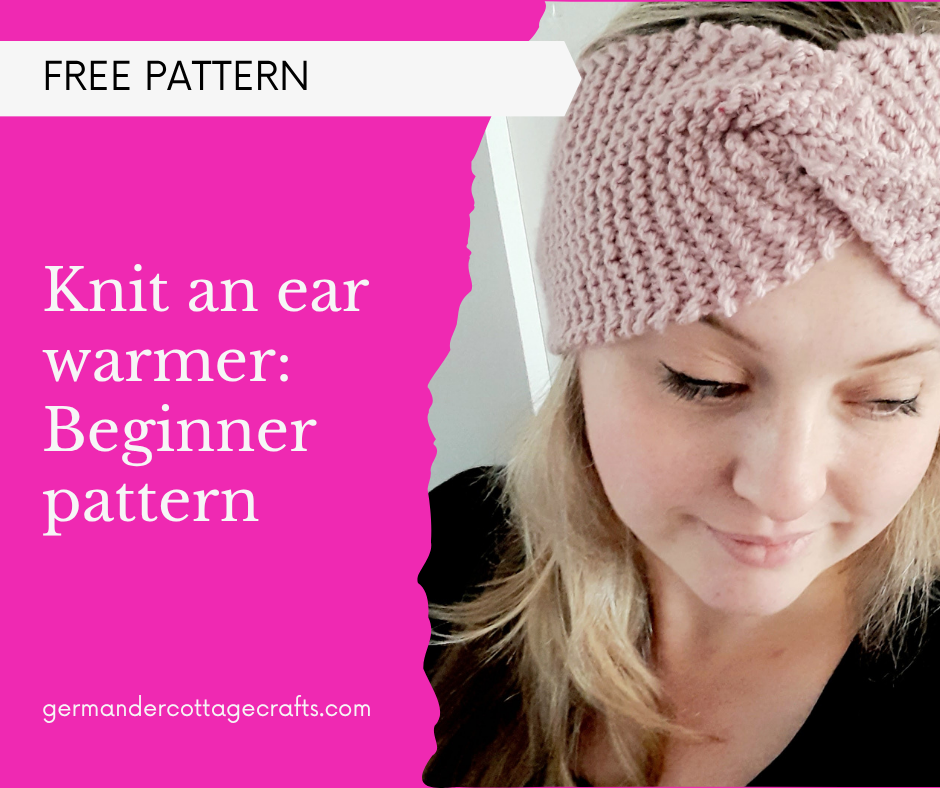
  • How to knit an ear warmer. Simple garter stitch headband tutorial for beginners.

    How to knit an ear warmer. Simple garter stitch headband tutorial for beginners.

    Beginner-friendly tutorial showing you how to knit an ear warmer. This really simple design is also perfect for knitters looking to get through their stash.

    Head warmer for beginners. How to knit an ear warmer. Knitting for beginners. Image shows a woman wearing a garter stitch headband. Ear warmer knitting tutorial. Learn to knit.

    Need a quick gift for a friend? Knit an ear warmer!

    Need to practice casting on and casting off, but you don’t want to knit something tedious like a long scarf? Knit an ear warmer!

    Do you just want a quick, satisfying project? Knit an ear warmer.

    You get my point. In this tutorial I will talk you through how to cast on, knit garter stitch and cast off.

    What you’ll need for this project:

    • Aran weight yarn. I used Kiddies Supersoft Aran in Blush. You will need approx. 50g of yarn no matter which brand you choose.
    • 5mm needles. In the tutorial, I’ve used 5mm circular needles (short, straight needles with a cord connecting them) but any needles are fine. Most beginners use straight needles.
    • Scissors, for cutting your yarn at the end.

    How to knit an ear warmer:

    This is a beginner pattern, meaning anybody who knows how to cast on and knit can make this item.

    Help! I don’t know how to do these things.

    Here’s a video showing you how to cast on. I use a cast on called the backwards loop method. This is the method that I was taught. If you don’t like this style of cast on, there are many others that you can try before you settle on what feels comfortable for you.

    Written instructions for this cast on:

    • Take the tail end between your thumb and forefinger in your right hand.
    • With your left hand, take the working yarn between your thumb and forefinger.
    • Drape the yarn over the top of your next three fingers and round again so that the yarn just overlaps slightly.
    • Turn your hand towards you.
    • With your other hand (keep hold of the tail end), insert your knitting needle into the loop that is sitting across the top of your three fingers.
    • Pull the working yarn to tighten the loop over the needle.
    • Repeat to end.

    Here’s how to knit the garter stitch. The garter stitch is the one we use to knit this ear warmer.

    • Cast on the desired amount of stitches. In this video I have cast on 18 stitches.
    • Insert the right hand needle into the front of the first stitch (it looks like a loop at this point) on the left hand needle.
    • Take the working yarn and wrap it around the back of the right hand needle and bring it down towards you so that it will sit between the left hand and right hand needle.
    • Insert your right hand needle back into the stitch and pull the stitch over the tip of the left hand needle onto the right hand needle.
    • Repeat to end.

    How to cast off:

    Written instructions for cast off:

    Casting off is pretty straightforward as long as you bear this in mind: If your tension is too tight when you cast off, you need to use a needle that is at least 0.5mm thicker. If your tension is too loose, use a smaller needle.

    Instructions for cast off :

    • Knit 2 stitches.
    • Using the left hand needle, pass the 1st stitch over the 2nd stitch on the right hand needle. 1 stitch remains on the right hand needle.
    • Knit 1 stitch from the left hand needle. 2 needles remain on the right hand needle.
    • Using the left hand needle, pass the 1st stitch over the 2nd stitch on the right hand needle. 1 stitch remains on the right hand needle.
    • Repeat step 3 and 4 to end.

    Now that you’ve learned how to cast on, knit and cast off, here is the pattern for you to follow!

    Knit an ear warmer:

    Cast on 18 sts

    Knit every row until piece measures 4 inches (10cm) less than your head width:

    • If your head measures 21 inches, Knit to 17 inches.
    • If your heard measures 22 inches, Knit to 18 inches.
    • If our head measures 23 inches, Knit to 19 inches.

    Cast off.

    Placing right sides together, fold the piece in half lengthways and then pinch each end so that they’re halved widthways. Slot the folded pieces together to create 4 layers and an S shape. Sew up all 4 layers together.

    Cut yarn and fasten off. Turn right side out and admire your handiwork.

    See the full video below to see a demonstration of the pinched twist and the finishing.

    How to knit an ear warmer. Simple beginner pattern for a knit headband. How to knit for complete beginners. Learn to knit the garter stitch. Woman wearing a knit headband.
  • Totes Crochet Bag. Free Granny Square Tote Bag Pattern.

    Totes Crochet Bag. Free Granny Square Tote Bag Pattern.

    Free crochet tote bag pattern. Free corchet granny square pattern for beginners. Crochet a bag.

    If you love granny squares and functional crochet, here is a pattern for a simple crochet bag that uses joined up granny squares. This is a free pattern for a crochet tote bag.

    Can a beginner make this crochet bag? Here’s a quick skill check:

    You should be able to:

    • Make a chain.
    • Make the basic crochet stitches e.g. double crochet and single crochet. If you need help with your crochet terms, I have a guide here.
    • Make a granny square. Here’s a free tutorial if you’re not sure how to crochet a granny square.
    • Join granny squares. Here’s how.

    Totes crochet bag 

    The Totes crochet bag is a simple design for a crochet bag. This is a pattern for a simple cotton crochet tote bag using granny squares and a combination of slip stitch, double and single crochet. 

    Use this crochet bag for anything. The straps will be worked continuously rather than sewn on for added strength. 

    Materials: 

    • 1 4mm crochet hook
    • Cygnet 100% Cotton DK (100g per ball): 1 x Smokey Purple, 1 x Pepper, 1 x Peony Pink, 1 x Golden, 1 x Spring, 2 x Vanilla Cream. 
    • Darning needle 

    Here is the link to the video playlist. The videos do not replace the pattern instructions; they are there as support with visualising the project. It is still useful to learn to read the written instructions to develop your skills. 

    I use US crochet terms throughout. 

    Glossary: 

    ChChain. Yarn over and pull through the 1 loop on the hook. 
    Ch spThe space of gap that has been created by stitches. 
    DcDouble crochet stitch: Yarn over, insert hook, yarn over and pull through, yarn over and pull through 2 loops on hook. Yarn over and pull through 2 loops on hook. 
    ScSingle crochet stitch.Insert hook into the chain or stitch, yarn over and pull through. Yarn over and pull through 2. 
    Sl stSlip stitch. Insert hook into chain or chain space, yarn over and pull through.
    RS Right side of the work. 
    WS Wrong side of the work. 

    You can see in the square above where the corners are and how we only increase in corners. 

    Step 1: Granny squares (Make 8) 

    Round 1. 

    1. Using yarn A, ch 4. Sl st to join with the 1st chain. 
    2. Ch 2 and dc 2 times into the centre of the ring. 
    3. Chain 2 and dc 3 times into centre of the ring. (6 dcs in total.)
    4. Repeat last step 2 more times. (12 dcs in total)
    5. Sl st into top of first dc chain to join the round. 

    Round 2: 

    1. Using. yarn B, sl st across top of first 3 dcs to get to the 1st corner ch sp.  Ch 3 and dc twice into ch sp. (3 dcs in total) ch 1 and dc 3 times into same ch sp. First corner done. 
    2. Chain 2 and dc 3 times into next ch sp. Ch 1 and make 3 more dcs into same ch sp. 
    3. Repeat step 2 twice more. 
    4. Sl st with top of 1st dc to close the round. 

    Round 3

    1.  Using yarn C, sl st across top of first 3 dcs to get to the 1st corner ch sp.  Ch 3 and dc twice into ch sp. (3 dcs in total) ch 1 and dc 3 times into same ch sp. 
    2. Ch 2 and work 3 dcs into next ch sp to corner ch sp
    3. Ch 2, 3dc in next ch sp, ch 1 and make 3 more dcs into same ch sp.  
    4. Repeat step 1 and 2 to end.  
    5. Sl st with top of 1st dc to close the round.

    Round 4 and 5: 

    Changing colours (Yarn D and E) at the beginning of each round, work instructions for round 3, 2 more times until you have 5 completed rounds in total. 

    Border: 

    Using Vanilla Cream (Yarn F) join new yarn  and work 1 dc into the top of every dc stitch, and 2 dcs in every ch sp to end. Sl st to close round. 

    Assembly: 

    The squares are joined in pairs and then as fours after some distancing with dc stitch. 

    Panels (Make 4) 

     With RS together and yarn F, Sl st to join across one side from the top right corner to the top left corner.

    Dc in every dc for two rows across the top of each panel. 

    Joining panels. 

    With RS facing, lay the upper panel facing the lower panel. The lower edge of the upper panel should be in line with the upper edge of the top panel. Sl st across to join. The dc rows will now be in the centre and across the top of the bag. 

    You will now have two rectangular pieces: The front and the back of the bag. 

    Edges: 

    Vertical (side) edge: 

    With RS facing, sc across all dc sts for 4 rows. 

    Horizontal (bottom) edge: 

    With RS facing, sc across all dc sts for 4 rows. 

    Joining the bag. 

    With RS facing, starting at the top right corner, use sl st joining method to join the vertical seam, horizontal (bottom) seam and back up the left side vertical seam. 

    Straps (make 2)

    Using removable stitch markers or safety pins , mark 5 stitches at the top of the bag that sit in line with the centre of each top granny square on the front and the back of the bag. You need to mark 4 areas of the bag. 

    Using yarn E, join new yarn and dc 5 sts. Ch 2 and turn. 

    Work 39 more rows. 

    Sl st to join with the marked strap area of the opposite side. 

    Repeat for second strap. 

    Weave in ends and enjoy!

  • How to crochet a circle. Crochet circle pattern for beginners. Crochet a flat circle that doesn’t curl or frill.

    How to crochet a circle. Crochet circle pattern for beginners. Crochet a flat circle that doesn’t curl or frill.

    This is a free pattern for a crochet circle. How to crochet a flat circle 

    Creating your first crochet circle is really tough, especially when you don’t know how to make it bigger or how to make it lie flat. With this pattern I can explain how to:

    1. Start the circle
    2. Increase the circle
    3. Make it lie flat

    Materials required: 

    • 50g/1.75oz of cotton DK yarn such as Cygnet cotton DK (100% cotton, 200m/219 yd per 100g/3.5oz ball) Any DK yarn will do here.
    • 3.75mm/F-5 crochet hook.
    • Scissors 
    • Darning needle

    Terms are written in US crochet terms throughout. Not sure what they are? Here’s a handy blog post explaining US and UK crochet terms.

    It’s so handy to know how to make a crochet circle. They’re not just great for granny square designs but you can also make circles big enough to be place mats, bags or cushion covers. Have fun learning how to make a crochet circle that stays flat!

    When you’re done with the tutorial, I’ve included some fun crochet kits that you can try. They will not only help you to practice the crochet circle, but they will help you learn how to make other useful crochet shapes for home decor and toys!

    Now for the tutorial with step by step photos. Here’s how I make a circle in crochet.

    Step 1: Make a slipknot and make a chain of 6 sts. 

    A crochet hook with a chain of 6 chains.

    Step 2: Slip stitch with the 1st chain (not the slipknot) to create a ring. 

    Step 4: Chain 3 (counts as 1st double crochet stitch) 

    Step 5: Make another double crochet into the centre of the ring. 

    Step 6: Make 10 more double crochet stitches into the centre of the ring. (12 sts in total).

    Step 7: Slip stitch to join the top of the chain 3 to the last dc. First round complete. (12 sts)

    A crochet circle in the first round.

    Next round: 

    A ch3 after the first round of crochet. Crochet a flat circle. This is a demonstration photo.

    Step 1: Chain 3 (counts as 1st double crochet) 

    Step 2: Make a double crochet stitch into the base of the chain 3. (1st increase done)

    The second stitch of the second crochet round when making a flat circle.

    Step 3: Make 2 double crochet stitches into the next stitch.

    Four stitches made for the second round of the crochet circle. Crochet circle tutorial in the round.

    Step 4: Make 2 double crochet stitches in every stitch around. (24 sts) 

    Step 5: Slip stitch with first chain 3 to close the round. 

    Two rounds done of a flat crochet circle. Crochet tutorial for beginners.

    Next round and all subsequent rounds: 

    Every round needs to increase by 12 stitches in order to retain shape and lie flat. 

    Round 3: 

    Start the round in the same way as the previous round but this time, make an increase every other stitch not every stitch. (36 sts)

    Round 4: Start the round in the same way as the previous round but this time, make an increase every 3rd stitch. That means there’s an increase in every 4th stitch. 

    Round 5 and all other rounds: Increase every 4th, 5th and 6th stitch per round. Make sure that the amount of stitches per round has increased by no more or less than 12 stitches

    Why not use your finished circle as a cute mat for plants or a placemat? 

    Crochet circles don’t always sit flat the first time around. here are some possible issues that will arise and how you can fix them:

    Circle starting to resemble an Elizabethan ruff?

    You have too many increases. Check to see whether you have made the appropriate amount of increases. If there are too many, start the round again.

    Circle starting to turn in like a bowl?

    You haven’t made enough increases. 

    Neither of the above solutions working?

    Change yarn and/or hook. It could be a tension issue. Always go up or down by 0.5mm until you reach your desired flatness.

    Email info@germandercottagecrafts.co.uk or visit my Youtube channel for further pattern help. 

    Patterns featuring crochet circles to inspire you:

    Please note, there are affiliate links here. This means that if you choose to purchase, I do receive a small commission at no further cost to you.

    Hoooked DIY Crochet Zpagetti Pouf Kit. Practice your crochet in-the-round with this quick and comfy Zpagettii pouf. They’ve been around for a while but we’re still loving the look of a knitted  and crochet poufs. Its soft textural shape of Zpagetti t-shirt yarns is both simple and complicated. With this DIY complete kit you can make your own affordable pouf. We have included a pair of jumbo knitting needles and also a crochet hook and both patterns so you can pick your favourite craft technique. This Hoooked knit & crochet set is also great as a creative DIY gift for a special someone. With this complete Hoooked kit you can cover a pouf with a cross section of 65-70 centimeters and a height of 30-40 centimeters.

    Paintbox yarns cotton Aran Daisy The Chick Crochet Kit. Practice your amigurumi skills with this adorable crochet chick kit. If you know how to crochet a circle, you can make cute little stuffed items like this!

    DMC Mindful Making The Peaceful Plant Pot Holders Crochet Kit. This kit will help you crochet a flat circle and also learn how to make it curl up on purpose to create the cylindrical shape perfect for pots, vases and bowls! Give your desk a mindful makeover with these gorgeous crochet plant pot holders.

  • There are many ways to knit socks.

    There are many ways to knit socks.

    Are you sitting down? I’m going to talk you through the many ways to knit socks. 

    Last year I received a refund request from a customer. They weren’t happy with their sock knitting kit and wanted a refund on the needles. The customer’s words were something like “there’s circular needles in here. No good for knitting socks!” 

    Let’s ignore the fact that the contents of the kit will have been clearly listed before purchase and that I am a knitwear designer and hopefully know a thing or two about knitting socks. Let’s focus on the “no good for knitting socks!” How do you know? Have you tried? 

    After talking the customer round (excuse the pun) they were willing to give the circulars a try. I introduced them to the method of magic loop knitting. They had never heard of this before. If you knit, every day is a school day. There are many, many ways to do something that achieves the same results as something else. Magic loop is just one method. 

    This article may contain affiliate links, meaning that if you choose to shop through any of the links, I do earn a small commission.

    Long circular needles (magic loop)

    Long circular needles aren’t just for hats and garments. You can use them for knitting flat as they are lighter and more compact than traditional straight knitting needles. What knitters do to make socks with long circulars is to choose circulars with a very long cable. I usually recommend 80cm or 100cm for socks. This cable is then pulled through to provide a loop on either side of the work. 

    In these photos I’m using Addi lace circulars with an 80cm cable.

    how to knit on magic loop

    I seem to find that if I was to join in the round at cast on (by pulling the cord through the halfway point of the stitches) I end up with a tangled mess and twisted stitches. This can be avoided entirely by knitting the first round in one flat row. When you have established the first row, simply pull the cord through the halfway point of stitches and carry on knitting. You will be left with the smallest of gaps at the top of the cuff but you can easily seam it closed at the end.

    Louise Tilbrook has a really handy tutorial for magic loop here

    Knitting on short circular needles 

    There are also short circulars. They’re brilliant for knitting the legs and the feet but you will need to switch to other circulars or DPNs for toe shaping. That’s not a preference thing- it’s just not physically possible to shape toes on 9 inch circulars.

    addi sockwonder short circular needles

    What I will say about the 9in circulars is that they create a tighter knit in my opinion. You definitely need to review your tension compared to when you use other methods. 

    Louise Tilbrook has a tutorial on knitting with tiny needles here. It can be hard to get to grips with them at first but if you can, it’s worth it. 

    Knitting with niche needles 

    There are also these funky little things called CraSyTrio. I think they’re awesome because they have the flexibility of the circular needle but a similar setup to double pointed needles.

    Double pointed needles

    Your experience with these will vary from “knitting ninja” to “fighting with a hedgehog” but if you persevere, I think you’ll be all right. I was wary of double pointed needles for a long time. I feared the complicated set up and when I started out, I would get myself into a tangle or lose my patience when one of the needles kept slipping off. 

    You may want to consider starting your DPN journey with something bigger like a sleeve or a hat. This will help you to practice and there’s more chance of you noticing dropped stitches with thicker yarn. 

    DPN hack: Cast on all of your stitches on one slightly larger needle. Using your smaller DPN needles, knit the set amount of divided stitches onto each needle. You will then have all stitches accounted for without having dropped your DPNs during cast on. Some patterns even tell you how many stitches to have on each needle e.g. there may be more stitches on the 3rd needle as that is the heel needle.

    If you need help choosing DPNs to knit with I have a blog post here.

     You can knit socks flat

    Even though knitting socks in the round is incredibly popular, there will always be knitters who prefer knitting them flat. I believe that these knitters are often left behind when it comes to sock design. Luckily, you can get a good range of flat knit socks thanks to the internet. I have a pattern for flat knit socks here that avoids all the requirements for stitch holders and multiple seams. Just sew up one seam at the end and you’re done.

    I hope you can find the time to explore all methods or practice a favourite. 

    Hanna 

    Sock knitting patterns to try!

    Easy flat knit, two needle socks.

    The Andalusian Stitch Socks

    Simple cuff-down beginner socks.

  • How to graft the toe of your sock. Kitchener stitch tutorial.

    How to graft the toe of your sock. Kitchener stitch tutorial.

    Here’s a quick, step by step photo tutorial showing you how to graft the toe of your socks. This is a really handy technique for sock knitting and once you get used to the direction of the darning needle, you’ll be ready to cast on your next pair of socks!

    Did you know?

    This method is also known as Kitchener stitch but knitters nowadays prefer to call it grafting. You can find out why here

    Grafting, step by step.

    To start, you have to end your toe knitting with an even number of stitches and they have to be divided between two needles. You can use any needles for this part but they have to sit parallel. Make sure that the two wrong sides of your work are facing. 

    Kitchener stitch tutorial for sock knitters. For best results, split your stitches evenly across 2 needles. Free sock knitting tutorial showing you how to graft your sock toes. How to knit socks cuff down. How to knit socks in the round.

    To set up, you first need to have your darning needle to hand with your yarn tail threaded through it. 

    1. Put your darning needle through the first stitch on the front needle (the one closest to you) as if to purl and pull your yarn through. Leave the stitch on the needle. 

    2. Put your darning needle through the first stitch on the back needle as if to knit and pull your yarn through. You also need to leave that stitch on the needle. 

    How to do the kitchener stitch knitting tutorial. Kitchener stitch sock toe. How to graft the toe of your knitted sock. Learn to knit socks and graft the toe. How to seamlessly close the toe of your sock. Image shows grafting stitches with a darning needles.

    The next 4 parts of this will be repeated to the end and they are as follows:  

    3. Put your darning needle through the first stitch on the front needle knitwise, thread the yarn through and slip that stitch off the needle.

    Put your darning needle through the first stitch on the front needle knitwise, thread the yarn through and slip that stitch off the needle. Grafting tutorial for knitting beginners.

     4. Put your darning needle through the first stitch on the front needle purlwise, thread the yarn through and keep that stitch on the needle.

    How to graft the toe of your sock. Kitchener stitch tutorial. Put your darning needle through the first stitch on the front needle purlwise, thread the yarn through and leave thatt stitch on the needle.

    5. Put your darning needle through the first stitch on the back needle purlwise, thread the yarn through and slip that stitch off the needle.

    Kitchener stitch knitting tutorial. Learn how to seamlessly close your sock toes and graft the stitches together.

    6. Put your darning needle through the first stitch on the back needle knitwise, thread the yarn through. Leave that stitch on the needle. 

    Kitchener stitch tutorial step by step.

    Now repeat the last 4 steps (3-6) until you’ve closed your toe. Weave in ends and wear with pride! 

    Graft your sock toes seamlessly with this step by step photo tutorial.

    Video demonstrating the grafted toe.

    Do you still need help with grafting? Here’s a handy video from my youtube channel demonstrating how to graft the toe of a sock. The instructions are at the end of this video.

    Tip: Why not try making a series of mini socks to practise your grafting technique? They make a fun decoration for advent, too.

    I’ve put the instructions together here for you too for a Pinterest pin. Pin it for safe keeping! 

    How to do Kitchener stitch. Grafting sock toes together easy tutorial.
    How to graft sock toes closed. kitchener stitch tutorial

    Sock knitting patterns to try:

    Easy 2 needle flat knit socks patternSimple two needle flat knit sock pattern.

    Flock socks knitting pattern. Cuff down sock knitting pattern.

    The Andalusian socks. Free textured sock knitting pattern.

    Other learning resources for knitters

    • Learn how to make a head warmer (headband) with garter stitch and worsted weight yarn. This tutorial shows you how to knit a garter stitch headband in several sizes. Beginners can complete this tutorial, either using the written instructions or the accompanying video. Visit the blog post here.
    • Learn how to knit a flat knit sock. Did you know that you don’t have to knit your socks with circular needles? You can also knit them flat on two straight needles. This is my best selling sock knitting pattern that I also added as a free pattern on the blog. Click here to read it.
    • Yarn weight and why it matters. This article explores the significance of tension, gauge and why you should always test it before starting out on a knitting project. Yarn thicknesses and needles don’t always match, so I show you what to watch out for and how to get it right every time. Read the post here.
  • Andalusian stitch socks. Free sock knitting pattern for a pair of simple, rib textured socks.

    Andalusian stitch socks. Free sock knitting pattern for a pair of simple, rib textured socks.

    The Andalusian stitch is one of my favourite stitches. It’s elegant, detailed and this is without having to do anything particularly complicated. This is a simple knit and purl stitch, and even someone trying socks for the first time could do this pattern. This sock pattern comes in three sizes and covers most adult foot sizes. Please make sure you measure around your foot before proceeding. Socks have negative ease, meaning they may seem small but that’s because they need to stretch to stay in place!

    Here’s a quick description of what the andalusian stitch actually is:

    Rounds 1-3: K all sts. 

    Round 4: *P1, K1; repeat  from * to end. 

    This is the Andalusian stitch pattern. 

    The Andalusian stitch socks are a simple, detailed sock design that are perfect for intermediate knitters looking to experiment with more textured detail.

    This pattern is available for free with ads, or, if preferred, you can get a handy PDF from Ko fi or Ravelry.

    This article does contain affiliate links, meaning that if you decide to purchase via the links, I earn a small commission.

    These are adult socks worked in the round from the cuff down. The textured Andalusian stitch pattern requires only knit and purl stitches to create a broken rib effect. I used a semi solid colour to emphasise the texture of both the sock and the heel. The heel is shaped using increases and decreases, and the toe is grafted together using the kitchener method. 

    For this sock pattern, I used High Twist Sock by Little Grey Girl Yarns (75% Superwash Merino & 25% Nylon) – 425m/465yd per 100g/3.5oz. Sample shown in the Avenell colorway, and it costs around £20. As this was a hand dyed yarn, sometimes the exact match won’t be available. Here’s a list of suitable alternatives to suit your budget:

    Other yarns to use for this pattern according to budget.

    King Cole Footsie 4ply: This 4ply sock yarn comes in a limited colour palette but it is only £5.54 ($7.40USD) per ball. You get a whopping 430m per ball, too. It’s excellent value and as it’s a solid colour, you’ll be able to see the stitches clearly! King Cole Footsie 4ply is a 100% synthetic yarn (93% acrylic, 7% other), so if you’re not fussed on wool or can’t wear it, this sock yarn is a better choice.

    West Yorkshire Spinners Signature 4ply: This yarn would work in a solid or self striping colourway. The yarn amount is the same and the gauge will be similar too. It’s not as ‘shiny’ as some hand dyed socks are, but the wool is still soft and incredibly comfortable. The crispness of the wool would ensure excellent stitch definition in this pattern particularly. I would recommend a colour like Poppy Seed, Pennyroyal or Fuchsia. Pennyroyal is pictured below.

    West Yorkshire Spinners Signature 4ply costs between £7.50 and £9

    Malabrigo Ultimate Sock: This 4ply yarn is at the more luxurious end of sock yarns. It’s 75% merino wool, so is very soft with that slight sheen. It is also hand dyed, so would look lovely with the texture of this sock pattern. It comes in a range of colours and is proced at or around £17.99, but one skein will do.

    The colour shown below is Zinnias (658).

    To make these socks, you will need to be familiar with the square heel. There’s a step by step photo tutorial here and a video below.

    How to knit the Andalusian stitch socks.

    Andalusian stitch sock knitting pattern. Socks with a simple rib detail. Easy free sock pattern. Cuff down sock knitting pattern to make. Free knit socks. beginner friendly sock knitting patterns. 4ply socks.

    Glossary

    DPN: Double pointed needles

    K: Knit

    K1, P1 rib: Knit 1 stitch, purl one stitch 

    K2tog: Knit two stitches together 

    M1L: Pick up the bar between the stitch you have just knitted and the one you are about to knit, bringing the needle from the front to the back. Knit into the back of the stitch. 

    M1R: Pick up the bar between the stitch you have just knitted and the next stitch, bringing the needle from the back to the front. Knit into the front. 

    P: Purl 

    P2tog: Purl two stitches together

    PM: Place marker

    PSSO: Pass slipped stitch over the knitted stitch. 

    RS: Right side

    SKP: Slip one, knit one, PSSO 

    SL: Slip stitch

    SM: Slip marker 

    St(s): Stitch(es)

    WS: Wrong side

    Gauge 

    35 stitches and 52 rounds = 10cm/4in using 2.5mm (US 1.5) needles

    Materials 

    • High Twist Sock by Little Grey Girl Yarns (75% Superwash Merino & 25% Nylon) – 425m/465yd per 100g/3.5oz. Sample shown in the Avenell colorway. 
    • Darning needle
    • 4 stitch markers
    • 2.5mm (US 1.5) circular (80cm/32in cable for magic loop) or DPNs or size needed for gauge.

    if you don’t have any suitable needles yet, I have a handy blog post here about DPNs, and one about circular needles to help you choose.

    Leg/foot circumference 

    Size 1: 6.5 in/16cm

    Size 2: 7.5 in/18cm

    Size 3: 8in/21cm

    The Pattern

    Cuff

    Loosely cast on 56 (64 72) sts, join to work in the round, being careful not to twist sts.

    Work in 1×1 twisted rib for 2.5cm/1in.

    Starting the leg of your andalusian stitch socks:

    PM after the first 28 (32 36) sts to establish halfway point. 

    Rounds 1-3: K all sts. 

    Round 4: *P1, K1; repeat  from * to end. 

    This is the Andalusian stitch pattern. 

    Repeat Rounds 1-4 until leg measures 18cm/7.25in from cast on. 

    Shaping your square (Dutch) sock heel.

    When working the heel, continue in the Andalusian stitch pattern for the stitches after the halfway marker. The heel and the underside of foot will be in knit stitch from now on. 

    Round 1: 

    M1R, PM (marker 2) and K 28 (32, 36) stitches, PM (marker 3) and M1L, SM (marker 1). Work Andalusian st pattern to end of round. 

    Round 2: 

    K to halfway marker, Andalusian st pattern to end of round, slipping markers as you come to them. 

    Rnd 3: 

    K to marker 2, M1R, SM, K 28 (32, 36) sts, SM and M1L, SM. Work Andalusian st pattern to end of round. 

    Repeat Rounds 2 and 3 until you have created 20 (22, 24) sts. 

    Turning the heel of your sock: 

    Working only with the first 48 (54, 60) sts continue as follows: 

    Short row 1: (RS) K to marker, SM, K 17 (20, 23) sts, SL1, K1 PSSO. This will now be referred to as SKP. Turn.

    Short row 2: (WS) P 7 (9, 11) sts, P2tog. Turn.

    Short row 3: (RS) K to 1 st before the gap which has formed, SKP. Turn. 

    Short row 4: (WS) P until 1 st before gap, P2tog. Turn.

    Repeat Rows 3 and 4 until there are 28 (32, 36) sts between the beginning of the round and the halfway marker (marker 1). This was the amount that you started with and your work should be RS facing with marker 2 on your right hand needle. 56 (64, 72) sts in total. 

    Set up in the round: 

    Rnd 1: 

    Remove marker 2. Insert needle as though making a M1R but instead of knitting, SL the twisted st on to right hand needle. K1 and PSSO. K to marker 3, remove marker 3, insert needle as though making a M1L but slip the twisted stitch onto left hand needle and K2tog. SM, K to end. 

    Foot: 

    K to halfway marker, Andalusian pattern to end of round until foot measures 2.5cm/1in less than desired length. 

    Toe

    Rnd 1: *SKP, K to 2 sts before marker, K2tog; repeat from to end. (4 sts decreased in total) 

    Rnd 2: K to end of round. 

    Repeat Rounds 1 and 2 until you have 36 (36, 40) sts in total. 

    THEN, decrease on every round until you have 20 (20, 24) sts in total. Remove marker 1. 

    Finishing

    Using kitchener method, graft the remaining sts together to close the toe. Weave in ends. 

    Thanks for using my andalusian stitch sock knitting pattern. Did you make a pair? Let me know in the comments. If you’d like, you can send me a photo of the socks and I’ll post them in the projects gallery here!