If you’ve wondered what a chain space is, look no further. Find out what the ch sp is in crochet patterns. This post will help you understand this technique better and apply it to your own crochet. This is a beginner crochet tutorial for people who are new to reading crochet patterns, or want to try more elaborate crochet patterns such as lace and filet crochet.
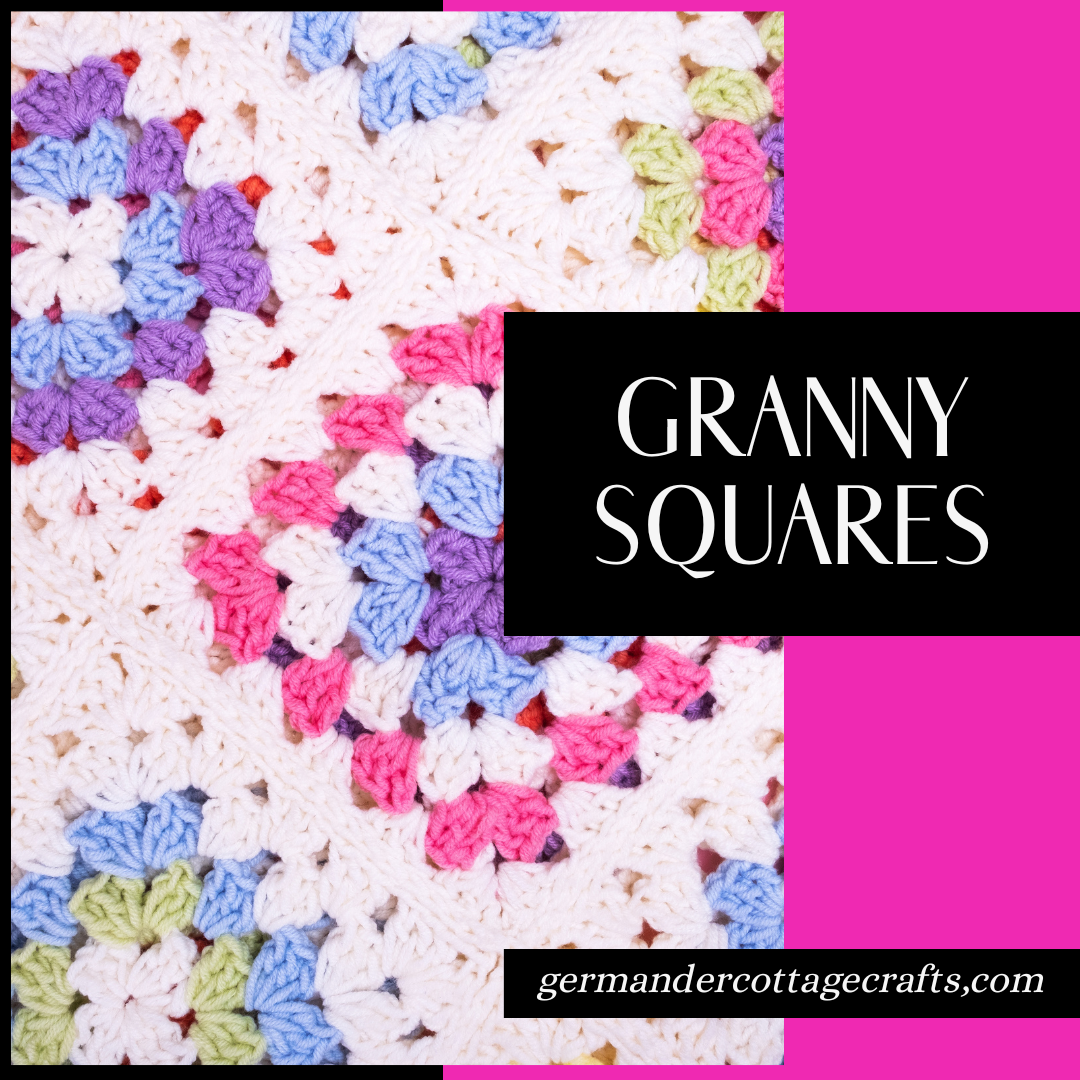
You can also use this information to help you with your granny squares.
If you’re new to crochet, you may have come across ‘chain space’, often mentioned in a pattern as ch sp. You may have thought ‘what does that mean?’ In this post, I’m going to show you what a crochet chain space is:
🧶Exactly what a chain space is.
🧶Where you will find one in your crochet pattern.
🧶Exactly where you’re supposed to put your crochet hook.
What is a chain space (ch sp) in crochet? How do we know where the pattern wants us to insert our hook?
A chain space is made when you skip a stitch or several stitches. You’ll see a lot of chain spaces used in granny squares or lacy crochet projects.
It can be really intimidating to come across this when you’re starting out, but it’s easier than it seems on paper! In crochet patterns, ch sp is used meaning one space. If you are not familiar with any of the stitches mentioned in this tutorial, you can find my handy crochet stitch guide by clicking here.
Working into the chain space can be a lot of fun as it means your project is moving quickly. You may feel like you’re just working through air. You’ll be able to make more intricate designs. This method is useful for filet crochet and lace crochet, as it looks like lace, but is half the work!
Should my chain space stitches be different?
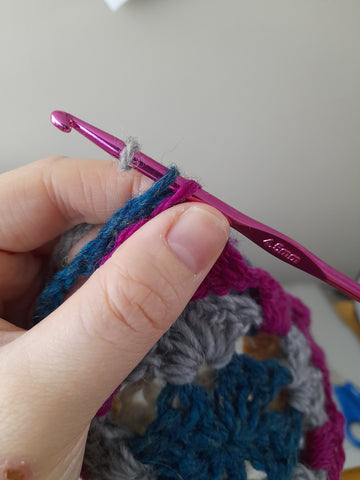
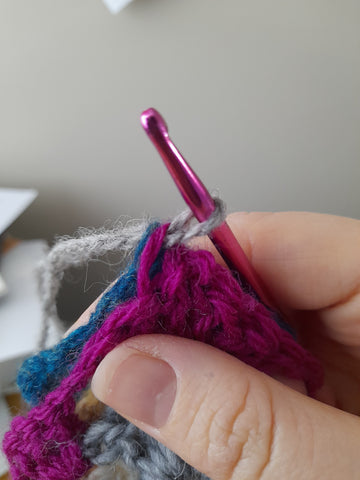
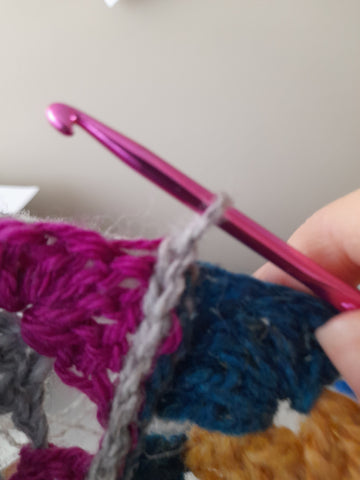
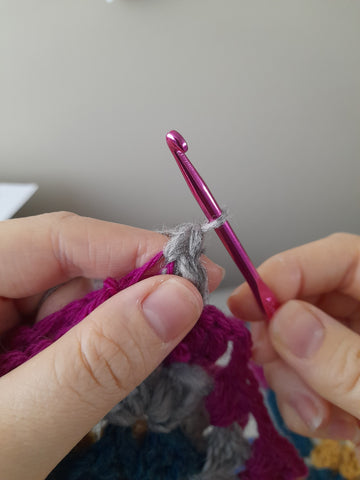
No. If you are asked to make a double crochet into the chain space, just make a double crochet. The chain space replaces the individual chain you may have otherwise been working in. See my example of where it goes here:
This is a double crochet stitch being worked into a chain space.
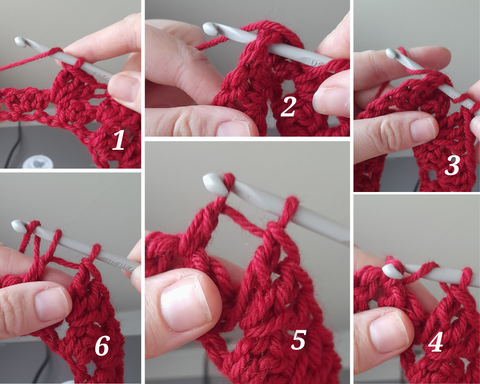
Other examples of where you need to use spaces to make the design:
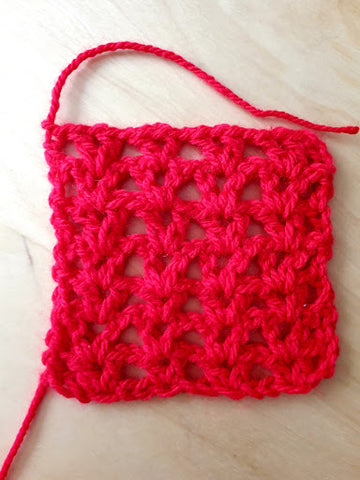
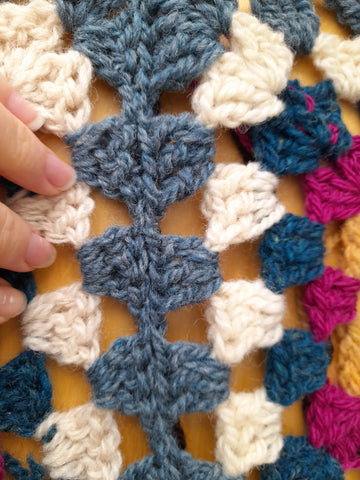
In this image, you can see that V stitch is constructed by working into the centre of every v ch sp across the row. Once you’ve set up the first row, it’s a breeze!
This is why the v stitch is one of my favourite crochet stitches of all time. With the V stitch, you don’t need to worry about counting chains and stitches because you’re just working into the chain space. Try it, and you’ll see what I mean! Why not have a go at a pattern that features the V stitch? I’ve shared some ideas below:
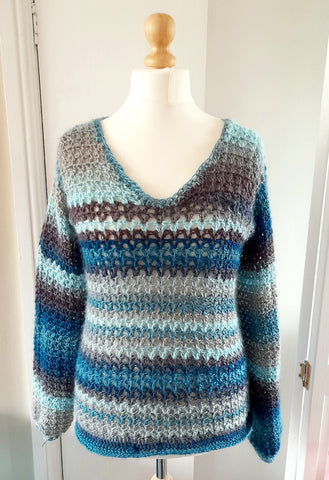
This is the v stitch pullover. This entire jumper is worked in v stitch. It’s much quicker to whip up than working a dc into every chain, for example.
Using chain spaces also means that projects with finer yarns take less time too. For example, the Titania shawl is a very big shawl but doesn’t take months to make because of the amount of openwork.
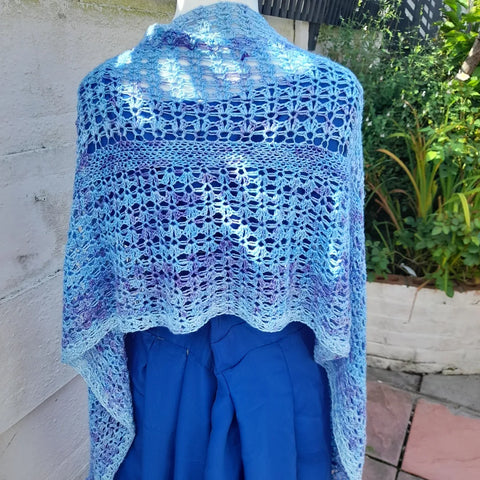
The Titania Shawl uses open spaces to create lace!
Chain space and its descriptions in patterns.
In my patterns I always describe the chain space as this:
Ch Sp: Chain space. The gap created between stitches.
This literally means the ‘gap’ that has been made between stitches or chains. Scroll down for a detailed look at where the space is and what you’re supposed to do with it.
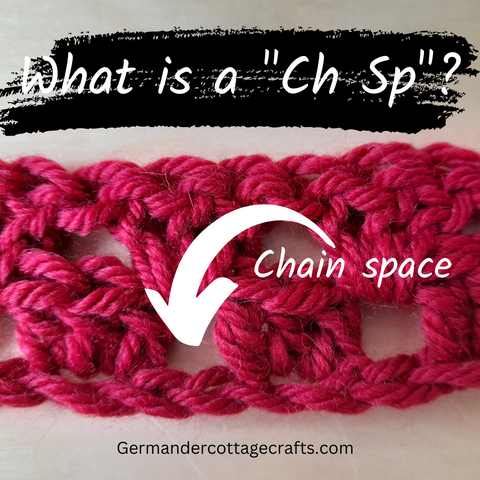
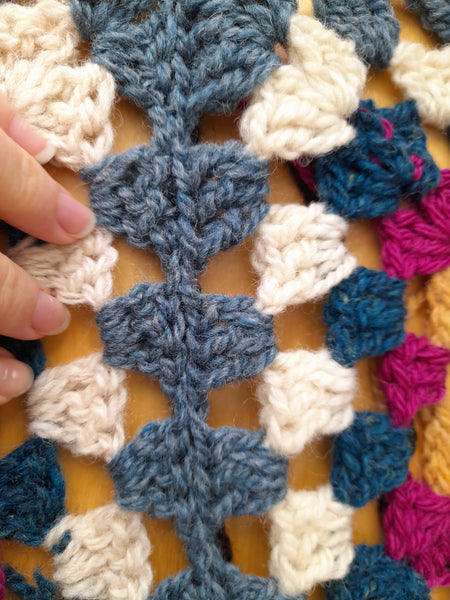
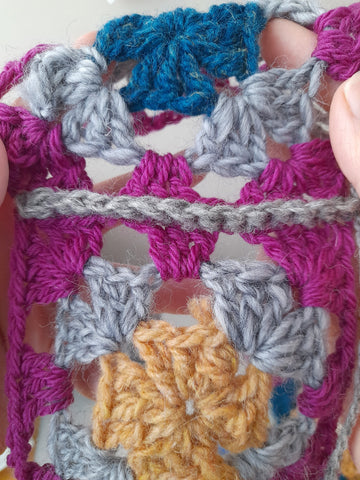
If you look at the image above, you’ll see that some chains have been skipped along the bottom row. This has created a chain space for you to work your next cluster of stitches into.
Other ways chain space may appear in patterns:
Ch-3 sp: The number here could change from pattern to pattern but it basically means to work your stitch into each space that has been created by 3 chains. It is just specifying what the space looks like. In this example, it has 3 chains above it. In the pattern pictured above I might say “Ch-2 sp” meaning, insert the hook into the space created by the 2 chains made in the row before. This will also appear if there are other types of stitches or clusters being used in the same row or round.
I hope this article helped!
Thanks for reading. If you’d like to learn more about crochet and crochet patterns, here are some more posts for you to explore.
Now that you know what a chain space is in crochet, why not try some of my patterns?
- V stitch sweater pattern
- Titania Lace Crochet Shawl
- Granny Squares
FAQ
Q. I can’t see the chain spaces easily. Why is this?
A. When you’re using a bulky or novelty yarn, it can be hard to see the gaps in your crochet. You may want to use a thinner yarn while you’re learning.
Something that also happens is that your tension is too tight, and as a result you don’t have enough space between stitches. Move up a hook size and see how that goes.
Q. My v stitches are too floppy. They don’t sit straight in my fabric. What can I do to fix them?
A. You might need to adjust your tension by going down a hook size. Loose tension can lead to really loose, open chains. They might need to be slightly tighter.