Tag: crochet tutorial

  • How to create crochet fabric that drapes.

    How to create crochet fabric that drapes.

    In this post, I’ll be talking about drape in crochet and how you can make a few simple tweaks to ensure your crochet fabric hangs as you want it to.

    You may have heard that crochet fabric doesn’t look as good as knit fabric. Did you know that it can? Here I will explain how to create fabric that drapes!

    If you’re a frequent knitter and you’ve dabbled with crochet, one of the main observations you may have made is the difference in drape. You may have heard knitters say that they don’t like the ‘stiff’ fabric that crochet produces, but I want to tell you that it doesn’t have to be stiff and boxy. Here I will show you how to create crochet fabric that drapes well. 

    What is drape and why does it matter in crochet?

    Drape is the way that a fabric flows or hangs. It allows it to sweep, gather or float off the body or sway in the wind. It’s gorgeous and it is absolutely what we want when it comes to shawls and garments. Think of chiffon sarongs, velvet curtains or lace shawls. How something drapes is down to a few factors of which I will explain below. 

    Semi circle crochet shawl pattern Eden cottage yarns nateby 4ply

    Example above: The Daphne shawl.

    As a rule, crochet stitches do tend to produce a thicker, denser fabric as the method of crochet requires wrapping and ‘knotting’ in the way the stitches are formed. If we were to compare crochet fabric with knit fabric according to the recommended hook and needle sizes on a ball band, the crochet will most probably be thicker, but this does not mean that crochet fabric is always stiff and dense. It is a common misconception that crochet fabric makes rubbish garments and that it is always stiff. 

    You can create drape with crochet fabric and it doesn’t just have to be with lace and openwork. 

    There are many ways that you can create looser, draping fabric with crochet that doesn’t have to result in it being completely see through and vulnerable to door handles. 

    This could be done in several ways: 

    1. The size of the crochet hook used. 
    2. The direction of the stitches e.g. vertical is less see through than horizontal. 
    3. The thickness of the yarn. 
    4. The stitch pattern. 
    5. The yarn used. Some yarns are just softer and have more drape, or a thinner feel to them. Not all 4ply and DK is the same thickness, for example. 
    6. Blocking. 

    Size matters when creating drape.

    If you use the crochet hook size recommended on the ball of yarn, I can almost guarantee that you will end up with a dense fabric. If you go up half a millimetre or a full millimetre, it will become a looser fabric. You can keep experimenting with this until you get to a hook size that creates the drape you want.

    Single crochet stitch is too dense for drape

    Horizontal vs vertical can improve your results when creating drape in crochet fabrics. 

    If you turn a crochet piece on its side, the layout of the stitches and the drop changes. This could help with drape too (depending on yarn). 

    Thickness of the yarn can affect drape 

    Using an aran or chunky yarn will cause problems if you don’t go up a hook size. If you have loose enough tension, you can get away with the recommended hook size, but if you can’t, you need to increase your hook size. Here is an example of a chunky/bulky weight yarn that has drape in a cardigan. 

    Chunky crochet cardigan pattern

    Believe it or not, you can get chunky weight yarn to drape. Creating crochet fabric that drapes with chunky yarn may seem unlikely but it is possible. Above is my Starburst crochet cardigan pattern and although it asks for chunky yarn and a 6mm hook, it has drape! It hangs off the body and the sleeves drape too. It is not a stiff jacket, it’s a cardigan. Bear in mind that although the pattern may ask for a specific size, you will know from your test square whether the finished item will drape how it is supposed to or not. Most makers will achieve the desired fabric if they go up a hook size, as my tension seems to be quite loose! You should always test your personal tension with the yarn to see if the yarn is thin or thick enough! 

    The stitch pattern used will affect the finished result. 

    The stitch pattern you use affects drape considerably. For example, double (UK treble) crochet is a longer, looser stitch than its predecessor, the single crochet stitch. 

    Single crochet (UK Double) is also the most dense stitch you can make. It is therefore brilliant for items that require structure, stiffness or an opaque, tight fabric. Here are some examples of where single crochet works wonders: 

    • amigurumi (pictured below)
    • baskets
    • bags
    • rugs 
    • hard wearing throws e.g. dog blankets 
    • Pet beds 
    • Bath mats
    • Face scrubbies 
    • Pouches and cases 
    Martia alien amigurumi crochet doll uses single crochet stitch

    It’s not just single crochet that will cause stiffness though. 

    Using any stitch can cause stiffness. All you have to do is use a crochet hook a couple of sizes smaller than the yarn recommends. It works just the same with knitting. 

    Yarns 

    We have briefly covered the yarn and the recommended sizes that come on the ball band. In my experience, the ball band isn’t always correct. This is because they are a guide rather than an absolute. That ball band does not take into account what your personal tension is. I was also saying that not all 4ply or DK yarns are the same. This is where wraps per inch (wpi) comes in handy. I will explain further in another blog post, but basically: 

    Working out WPI: 

    Wrap your yarn around a pencil or a pair of knitting needles for 3-4 inches. Using a ruler, measure how many wraps per inch. This gives you a clear idea of how thick your yarn actually is.  Although Cygnet boho spirit says it is DK, the recommended hook/needle is 4.5-5mm. If I were to work out wpi with Cygnet boho and Cygnet DK, they would be different thicknesses. 

    Blocking creates drape!

    If you are using natural fibres, blocking is invaluable for altering the drape and the feel of the finished item. It can help it to hold it’s shape and open out any stitches that are deliberately loose e.g. lace stitches. You can also block acrylic by ‘killing’ the fabric with steam or a warm iron just hovering above it, but most of the time, acrylic can drape if you just use the right hook. 

    Overall, I think experimenting with crochet and trying out crochet drape is worth the time. I don’t think knitters should shy away from crochet because the stitches are different.

  • Totes Crochet Bag. Free Granny Square Tote Bag Pattern.

    Totes Crochet Bag. Free Granny Square Tote Bag Pattern.

    Free crochet tote bag pattern. Free corchet granny square pattern for beginners. Crochet a bag.

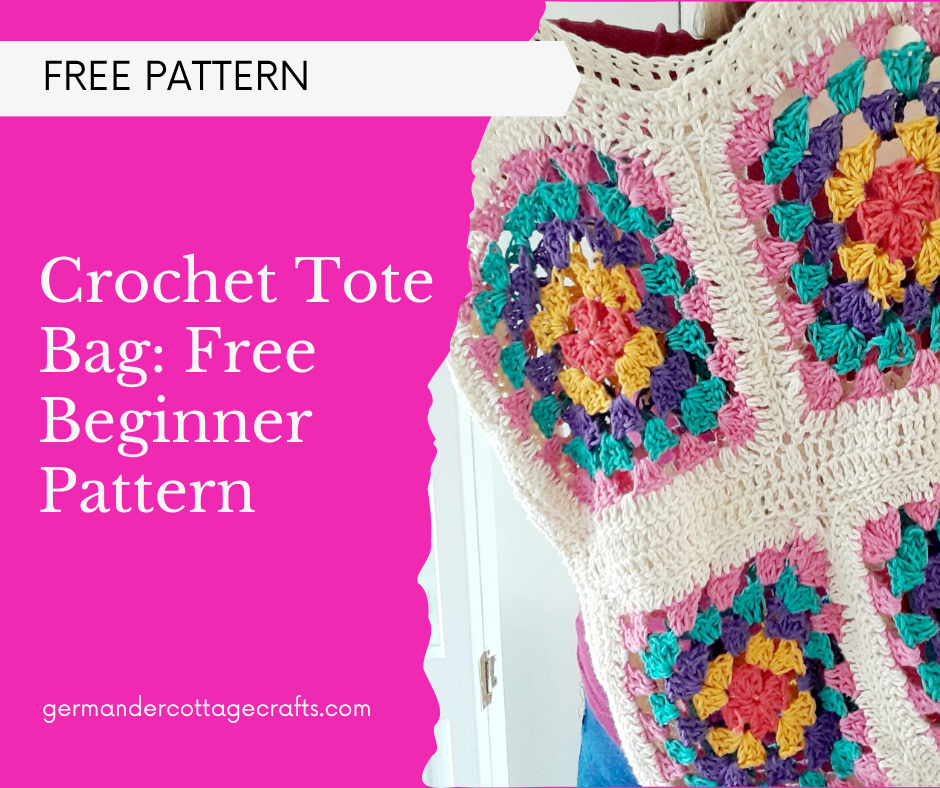
    If you love granny squares and functional crochet, here is a pattern for a simple crochet bag that uses joined up granny squares. This is a free pattern for a crochet tote bag.

    Can a beginner make this crochet bag? Here’s a quick skill check:

    You should be able to:

    • Make a chain.
    • Make the basic crochet stitches e.g. double crochet and single crochet. If you need help with your crochet terms, I have a guide here.
    • Make a granny square. Here’s a free tutorial if you’re not sure how to crochet a granny square.
    • Join granny squares. Here’s how.

    Totes crochet bag 

    The Totes crochet bag is a simple design for a crochet bag. This is a pattern for a simple cotton crochet tote bag using granny squares and a combination of slip stitch, double and single crochet. 

    Use this crochet bag for anything. The straps will be worked continuously rather than sewn on for added strength. 

    Materials: 

    • 1 4mm crochet hook
    • Cygnet 100% Cotton DK (100g per ball): 1 x Smokey Purple, 1 x Pepper, 1 x Peony Pink, 1 x Golden, 1 x Spring, 2 x Vanilla Cream. 
    • Darning needle 

    Here is the link to the video playlist. The videos do not replace the pattern instructions; they are there as support with visualising the project. It is still useful to learn to read the written instructions to develop your skills. 

    I use US crochet terms throughout. 

    Glossary: 

    ChChain. Yarn over and pull through the 1 loop on the hook. 
    Ch spThe space of gap that has been created by stitches. 
    DcDouble crochet stitch: Yarn over, insert hook, yarn over and pull through, yarn over and pull through 2 loops on hook. Yarn over and pull through 2 loops on hook. 
    ScSingle crochet stitch.Insert hook into the chain or stitch, yarn over and pull through. Yarn over and pull through 2. 
    Sl stSlip stitch. Insert hook into chain or chain space, yarn over and pull through.
    RS Right side of the work. 
    WS Wrong side of the work. 

    You can see in the square above where the corners are and how we only increase in corners. 

    Step 1: Granny squares (Make 8) 

    Round 1. 

    1. Using yarn A, ch 4. Sl st to join with the 1st chain. 
    2. Ch 2 and dc 2 times into the centre of the ring. 
    3. Chain 2 and dc 3 times into centre of the ring. (6 dcs in total.)
    4. Repeat last step 2 more times. (12 dcs in total)
    5. Sl st into top of first dc chain to join the round. 

    Round 2: 

    1. Using. yarn B, sl st across top of first 3 dcs to get to the 1st corner ch sp.  Ch 3 and dc twice into ch sp. (3 dcs in total) ch 1 and dc 3 times into same ch sp. First corner done. 
    2. Chain 2 and dc 3 times into next ch sp. Ch 1 and make 3 more dcs into same ch sp. 
    3. Repeat step 2 twice more. 
    4. Sl st with top of 1st dc to close the round. 

    Round 3

    1.  Using yarn C, sl st across top of first 3 dcs to get to the 1st corner ch sp.  Ch 3 and dc twice into ch sp. (3 dcs in total) ch 1 and dc 3 times into same ch sp. 
    2. Ch 2 and work 3 dcs into next ch sp to corner ch sp
    3. Ch 2, 3dc in next ch sp, ch 1 and make 3 more dcs into same ch sp.  
    4. Repeat step 1 and 2 to end.  
    5. Sl st with top of 1st dc to close the round.

    Round 4 and 5: 

    Changing colours (Yarn D and E) at the beginning of each round, work instructions for round 3, 2 more times until you have 5 completed rounds in total. 

    Border: 

    Using Vanilla Cream (Yarn F) join new yarn  and work 1 dc into the top of every dc stitch, and 2 dcs in every ch sp to end. Sl st to close round. 

    Assembly: 

    The squares are joined in pairs and then as fours after some distancing with dc stitch. 

    Panels (Make 4) 

     With RS together and yarn F, Sl st to join across one side from the top right corner to the top left corner.

    Dc in every dc for two rows across the top of each panel. 

    Joining panels. 

    With RS facing, lay the upper panel facing the lower panel. The lower edge of the upper panel should be in line with the upper edge of the top panel. Sl st across to join. The dc rows will now be in the centre and across the top of the bag. 

    You will now have two rectangular pieces: The front and the back of the bag. 

    Edges: 

    Vertical (side) edge: 

    With RS facing, sc across all dc sts for 4 rows. 

    Horizontal (bottom) edge: 

    With RS facing, sc across all dc sts for 4 rows. 

    Joining the bag. 

    With RS facing, starting at the top right corner, use sl st joining method to join the vertical seam, horizontal (bottom) seam and back up the left side vertical seam. 

    Straps (make 2)

    Using removable stitch markers or safety pins , mark 5 stitches at the top of the bag that sit in line with the centre of each top granny square on the front and the back of the bag. You need to mark 4 areas of the bag. 

    Using yarn E, join new yarn and dc 5 sts. Ch 2 and turn. 

    Work 39 more rows. 

    Sl st to join with the marked strap area of the opposite side. 

    Repeat for second strap. 

    Weave in ends and enjoy!

  • How to crochet a circle. Crochet circle pattern for beginners. Crochet a flat circle that doesn’t curl or frill.

    How to crochet a circle. Crochet circle pattern for beginners. Crochet a flat circle that doesn’t curl or frill.

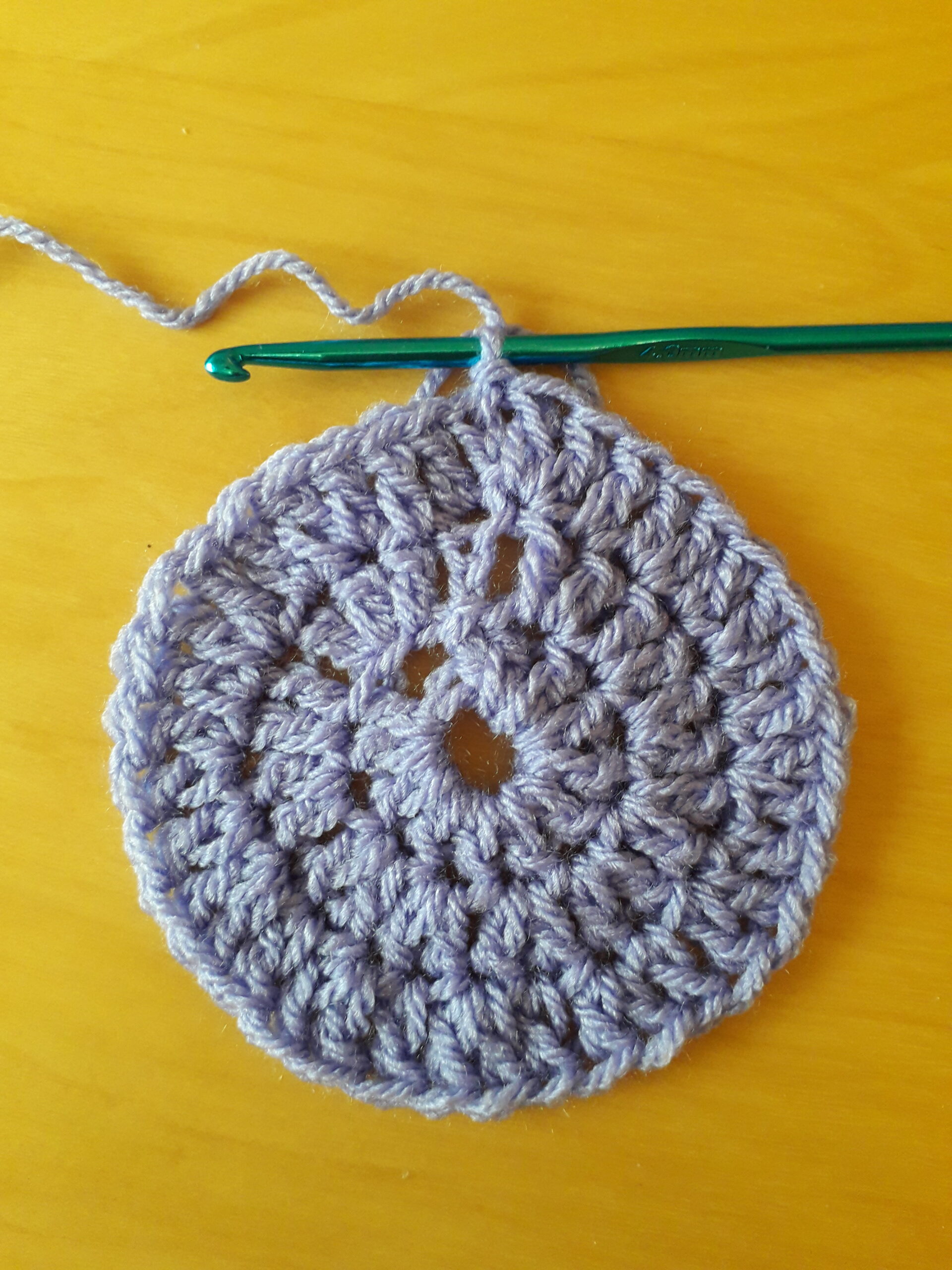
    This is a free pattern for a crochet circle. How to crochet a flat circle 

    Creating your first crochet circle is really tough, especially when you don’t know how to make it bigger or how to make it lie flat. With this pattern I can explain how to:

    1. Start the circle
    2. Increase the circle
    3. Make it lie flat

    Materials required: 

    • 50g/1.75oz of cotton DK yarn such as Cygnet cotton DK (100% cotton, 200m/219 yd per 100g/3.5oz ball) Any DK yarn will do here.
    • 3.75mm/F-5 crochet hook.
    • Scissors 
    • Darning needle

    Terms are written in US crochet terms throughout. Not sure what they are? Here’s a handy blog post explaining US and UK crochet terms.

    It’s so handy to know how to make a crochet circle. They’re not just great for granny square designs but you can also make circles big enough to be place mats, bags or cushion covers. Have fun learning how to make a crochet circle that stays flat!

    When you’re done with the tutorial, I’ve included some fun crochet kits that you can try. They will not only help you to practice the crochet circle, but they will help you learn how to make other useful crochet shapes for home decor and toys!

    Now for the tutorial with step by step photos. Here’s how I make a circle in crochet.

    Step 1: Make a slipknot and make a chain of 6 sts. 

    A crochet hook with a chain of 6 chains.

    Step 2: Slip stitch with the 1st chain (not the slipknot) to create a ring. 

    Step 4: Chain 3 (counts as 1st double crochet stitch) 

    Step 5: Make another double crochet into the centre of the ring. 

    Step 6: Make 10 more double crochet stitches into the centre of the ring. (12 sts in total).

    Step 7: Slip stitch to join the top of the chain 3 to the last dc. First round complete. (12 sts)

    A crochet circle in the first round.

    Next round: 

    A ch3 after the first round of crochet. Crochet a flat circle. This is a demonstration photo.

    Step 1: Chain 3 (counts as 1st double crochet) 

    Step 2: Make a double crochet stitch into the base of the chain 3. (1st increase done)

    The second stitch of the second crochet round when making a flat circle.

    Step 3: Make 2 double crochet stitches into the next stitch.

    Four stitches made for the second round of the crochet circle. Crochet circle tutorial in the round.

    Step 4: Make 2 double crochet stitches in every stitch around. (24 sts) 

    Step 5: Slip stitch with first chain 3 to close the round. 

    Two rounds done of a flat crochet circle. Crochet tutorial for beginners.

    Next round and all subsequent rounds: 

    Every round needs to increase by 12 stitches in order to retain shape and lie flat. 

    Round 3: 

    Start the round in the same way as the previous round but this time, make an increase every other stitch not every stitch. (36 sts)

    Round 4: Start the round in the same way as the previous round but this time, make an increase every 3rd stitch. That means there’s an increase in every 4th stitch. 

    Round 5 and all other rounds: Increase every 4th, 5th and 6th stitch per round. Make sure that the amount of stitches per round has increased by no more or less than 12 stitches

    Why not use your finished circle as a cute mat for plants or a placemat? 

    Crochet circles don’t always sit flat the first time around. here are some possible issues that will arise and how you can fix them:

    Circle starting to resemble an Elizabethan ruff?

    You have too many increases. Check to see whether you have made the appropriate amount of increases. If there are too many, start the round again.

    Circle starting to turn in like a bowl?

    You haven’t made enough increases. 

    Neither of the above solutions working?

    Change yarn and/or hook. It could be a tension issue. Always go up or down by 0.5mm until you reach your desired flatness.

    Email info@germandercottagecrafts.co.uk or visit my Youtube channel for further pattern help. 

    Patterns featuring crochet circles to inspire you:

    Please note, there are affiliate links here. This means that if you choose to purchase, I do receive a small commission at no further cost to you.

    Hoooked DIY Crochet Zpagetti Pouf Kit. Practice your crochet in-the-round with this quick and comfy Zpagettii pouf. They’ve been around for a while but we’re still loving the look of a knitted  and crochet poufs. Its soft textural shape of Zpagetti t-shirt yarns is both simple and complicated. With this DIY complete kit you can make your own affordable pouf. We have included a pair of jumbo knitting needles and also a crochet hook and both patterns so you can pick your favourite craft technique. This Hoooked knit & crochet set is also great as a creative DIY gift for a special someone. With this complete Hoooked kit you can cover a pouf with a cross section of 65-70 centimeters and a height of 30-40 centimeters.

    Paintbox yarns cotton Aran Daisy The Chick Crochet Kit. Practice your amigurumi skills with this adorable crochet chick kit. If you know how to crochet a circle, you can make cute little stuffed items like this!

    DMC Mindful Making The Peaceful Plant Pot Holders Crochet Kit. This kit will help you crochet a flat circle and also learn how to make it curl up on purpose to create the cylindrical shape perfect for pots, vases and bowls! Give your desk a mindful makeover with these gorgeous crochet plant pot holders.

  • Where to put your hook in crochet. How to crochet for complete beginners.

    Where to put your hook in crochet. How to crochet for complete beginners.

    Have you started reading crochet patterns but you’re not sure where to put your crochet hook? Here I’ll show you where to put your hook in crochet.

    Disclosure: This post may contain affiliate links, meaning I get a commission if you decide to make a purchase through my links, at no cost to you.

    Stitch tutorials on Youtube tend to be standalone videos, meaning they are not about a specific pattern. They show you how to do the stitch at the basic level but if you are looking at a pattern, you’ll find variations of that same stitch. For example, if I am showing you how to do the V stitch, I might do it using double crochet (UK treble) but in a pattern, I may say that the v stitch is made using half double crochet (UK half treble). This changes from pattern to pattern and the designer should always explain how to make the desired stitch if it varies from one of the basic stitches. This is the same for where you are supposed to put your hook. Not all patterns will want you to put your hook under both loops. Some will specify back loop or front loop. 

    I’ll show you where to put your hook when you’re doing crochet. 

    This example is using a half double crochet (UK half treble) piece. This example can be used for any pattern that uses any of these basic stitches: 

     US term UK term 
    Single crochet (Sc)Double crochet (Dc)
    Half double crochet (Hdc)Half treble crochet (Htr)
    Double crochet (Dc)Treble crochet (Tr)
    Triple crochet (Tr)Double treble crochet (Dtr)

    Don’t know what any of these are? Try my basic stitch guide here. 

    Example 1: Hdc stitch not specified. 

    In this scenario the pattern will just say something along the lines of “Yarn over, insert hook, yarn over and pull up a loop” and if you’re a beginner you might think “insert where?”. In this scenario, if the designer has not specified, it means under both loops. 

    Insert hook under both loops.

    If you look at the top of your stitches, you’ll see that they form a “v” shape. It’s similar to how a knitted stitch looks in stockinette. Imagine that the v has two legs. You need to put your hook under both of those legs. 

    Both loops on hook

    See how there are two legs on the hook? This still only counts as 3 loops on the hook but I’ve made sure that I’ve gone under both legs of the stitch.

    Example 2: The pattern specifies back loop only. 

    Back loop only is where you insert your hook into the back leg of the v. This is clearly explained in the pattern and the designer wants you to do this to achieve a particular texture. 

    back loop hdc

    Example 3: The pattern specifies front loop only. 

    In this case you need to insert your hook into the front leg of the v. The designer will have specified because it’s crucial to the design. There will be a certain texture that needs to be achieved. 

    front loop hdc

    The front loop is the leg of the v that is nearest you. This will also be referred to as the chain or the stitch. 

    Still not clear on where you need to put your hook? 

    If the pattern is confusing you, try to get in touch with the designer. Sometimes it could just need spelling out, or there may be a mistake they don’t know about yet. 

     Want to get started with crochet? 

    Head to Minerva Crafts to find a range of crochet hooks to help you get started. 

  • Single Crochet Rib Tutorial

    Single Crochet Rib Tutorial

    If you’re just learning to crochet, you may be surprised to see how many knit-like effects you can create with your crochet hook. Single crochet rib (also known as double crochet rib in UK terms) is a really quick and effective way to add rib detailing to your projects. 

    This article contains affiliate links. I receive a small commission from any purchases made using the links.

    Crochet rib is a major detail in the Beyond cardigan and as part of this crochet along, I’m doing stitch tutorials to help you achieve your goals of making your first crochet cardigan! 

    The yarn I’ve used in this tutorial is Paintbox Wool Mix Aran in Bubblegum.

    Why not check out these patterns to help you practice crochet rib even more:

    Beyond cardigan pattern.

    Betwixt Cowl Pattern

    Lovechunk baby sweater.

    Here are some step by step photos to help you. 

    Step 1: 

    Make your chain as instructed by the pattern. Here’s an example chain of 22. 

    Step 2: 

    Insert your hook into the 2nd chain from the hook. That does not include the chain on the hook. Make a single crochet stitch: insert hook, yarn over, pull through a loop, yarn over and pull through all 2 loops on hook. 

    Single crochet in every chain to end. 21 stitches. 

    Step 3:

    Chain 1 and turn. Insert hook into the 2nd chain from hook but this time do it in the back loop only. Single crochet in every back loop to end. 

    Step 4:

    Chain 1, turn and work a single crochet stitch into the back loop of every single crochet stitch to end. 

    Step 5:

    Repeat step 4 until you have achieved the desired amount of rows.

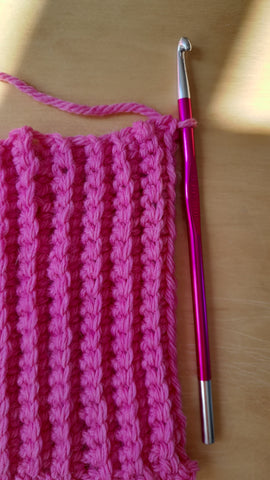
    Your crochet rib will look like this when you turn it from horizontal to vertical. 

    Found this tutorial helpful? Why not share it? 

  • Free Beginner Granny Square Pattern For Beginners

    Free Beginner Granny Square Pattern For Beginners

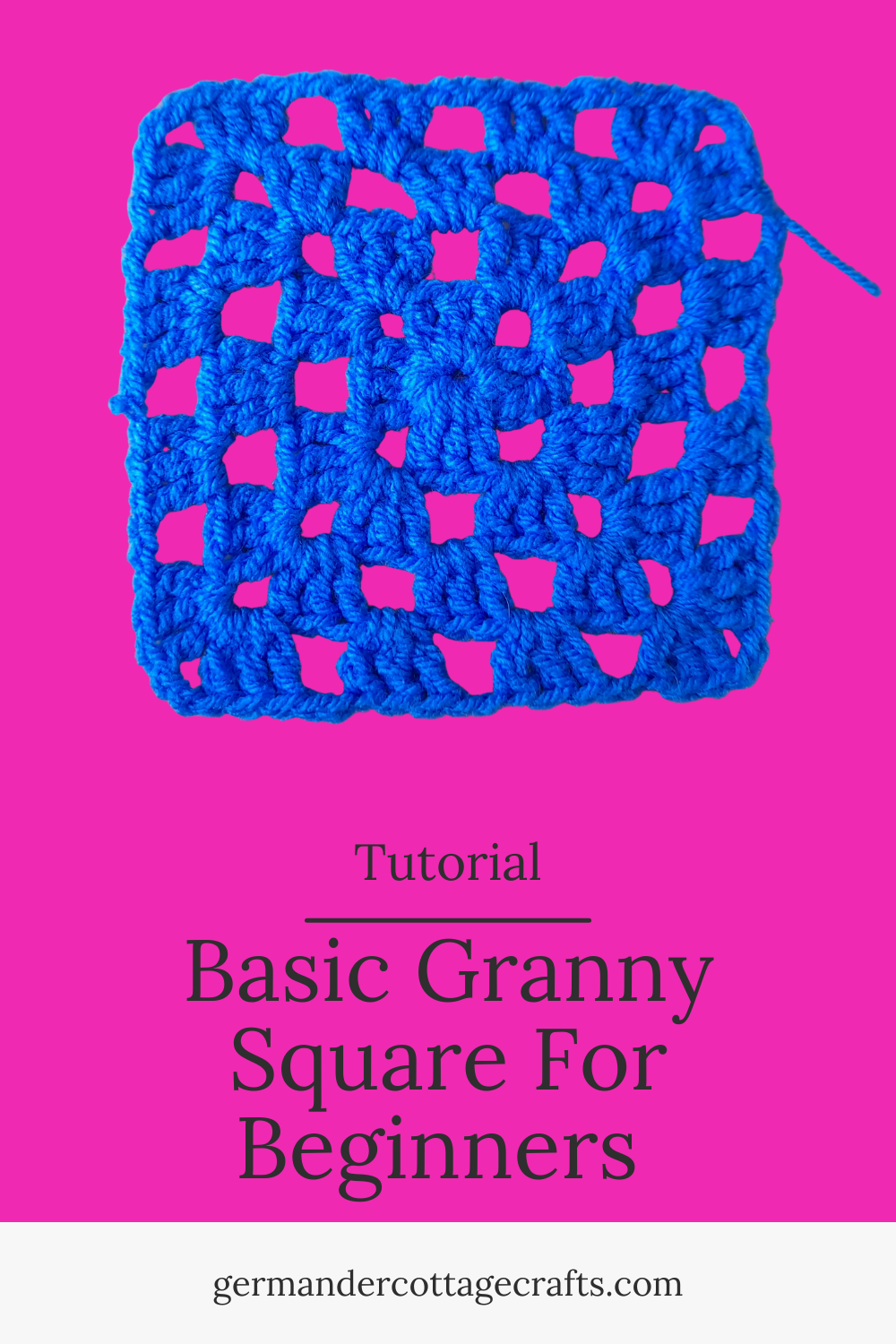
    Below you’ll find my free granny square crochet pattern just for beginners. If you’ve been wanting to make your own crochet squares for a while but don’t know where to start, this is a great place! I wrote this pattern to accompany a youtube tutorial which you can find below. If you’d prefer the written instructions, it’s all here.

    If you’d rather have the ad-free version, you can download the PDF of this pattern here.

    Learn to make a granny square with this easy, step by step tutorial. Before you know it, you’ll be whipping up granny squares everywhere, any time!

    Basic granny square pattern 

    These are instructions for a basic beginner granny square. There is a free tutorial attached to this pattern here. https://youtu.be/u0FFaFjJj7M 

    Glossary 

    ChChain. Yarn over and pull through the 1 loop on the hook. 
    Ch spThe space of gap that has been created by stitches. 
    DcDouble crochet stitch: Yarn over, insert hook, yarn over and pull through, yarn over and pull through 2 loops on hook. Yarn over and pull through 2 loops on hook. 
    SlSlip stitch. Insert hook into chain or chain space, yarn over and pull through.

    To work the granny square, we start with a chain, join it to make a ring and work our first dc cluster into the centre of that ring. After that, we chain and work dcs into every chain space. Once you get the hang of it, the granny square is versatile and can come in any combination of stitches!

    Materials required to make a granny square:

    • 4mm (US 6) crochet hook. 
    • A small amount of DK weight yarn. 30g/1oz
    • Scissors 

    Instructions: 

    Start by making a slipknot. 

    Round 1. 

    1. Ch 4. Sl in 4th ch from hook.
    2. Ch 2 and dc 2 times into the centre of the ring.  1st cluster formed. 
    3. Chain 2 and dc 3 times into centre of the ring. (6 dcs in total.)
    4. Repeat last step 2 more times. (12 dcs in total)
    5. Sl st into top of first dc chain to join the round. 

    Round 2: 

    1. Sl across top of first 3 dcs to get to the 1st corner ch sp.  Ch 3 and dc twice into ch sp. (3 dcs in total) ch 1 and dc 3 times into same ch sp. First corner done. 
    2. Chain 2 and dc 3 times into next ch sp. Ch 1 and make 3 more dcs into same ch sp. 
    3. Repeat step 2 twice more. 
    4. Sl with top of 1st dc to close the round. 

    Round 3

    1. Sl across top of first 3 dcs to get to the 1st corner ch sp.  Ch 3 and dc twice into ch sp. (3 dcs in total) ch 1 and dc 3 times into same ch sp. 
    2. Ch 2 and work 3 dcs into next ch sp to corner ch sp
    3. Ch 2, 3dc in next ch sp, ch 1 and make 3 more dcs into same ch sp.  
    4. Repeat step 1 and 2 to end.  
    5. Sl with top of 1st dc to close the round.

    Round 4 and 5: 

    Work instructions for round 3, 2 more times until you have 5 completed rounds in total. There will be more chain spaces to work between corners as the square gets bigger. 

    To finish your square, just sl and fasten off. 

    This is a free pattern for beginners. If you loved this, please consider leaving a tip or sharing on social media!

    cards
    Powered by paypal
    Free Granny Square Crochet Pattern For Beginners. Image shows a granny square with a crochet hook resting on it.